What water softening is, and why Buckeye's groundwater demands it
Water hardness is the concentration of dissolved calcium and magnesium in your water supply. The City of Buckeye relies almost entirely on groundwater, not the Colorado River surface blend most of the Phoenix metro uses. That groundwater carries naturally high calcium and magnesium levels from the desert aquifer system, producing water that typically tests at 15 to 30 grains per gallon (GPG). By the Water Quality Association's scale, anything above 10.5 GPG is "very hard." Buckeye's water frequently exceeds that by a factor of two or three.
A salt-based ion-exchange water softener is the only technology that fully removes these minerals from the water entering your home. The system replaces calcium and magnesium ions with sodium ions as water passes through a resin bed, producing genuinely softened water throughout the house. The resin periodically regenerates using a brine solution to flush out the accumulated minerals and restore ion-exchange capacity.
The practical difference is measurable. Water heaters in Buckeye without softeners accumulate scale rapidly, cutting efficiency and lifespan to 6 to 9 years. Fixtures, faucet cartridges, and showerheads clog with white mineral deposits. Dishwashers leave film on every load regardless of detergent. After softener installation, these problems stop. Soap lathers as expected. Appliances run efficiently. Scale stops forming.
How we assess your water and size the right system
Installing the wrong size softener creates problems of its own. Undersized systems regenerate too often, waste salt and water, and wear out faster. Oversized systems don't regenerate frequently enough and may leave residual hardness. We test first.
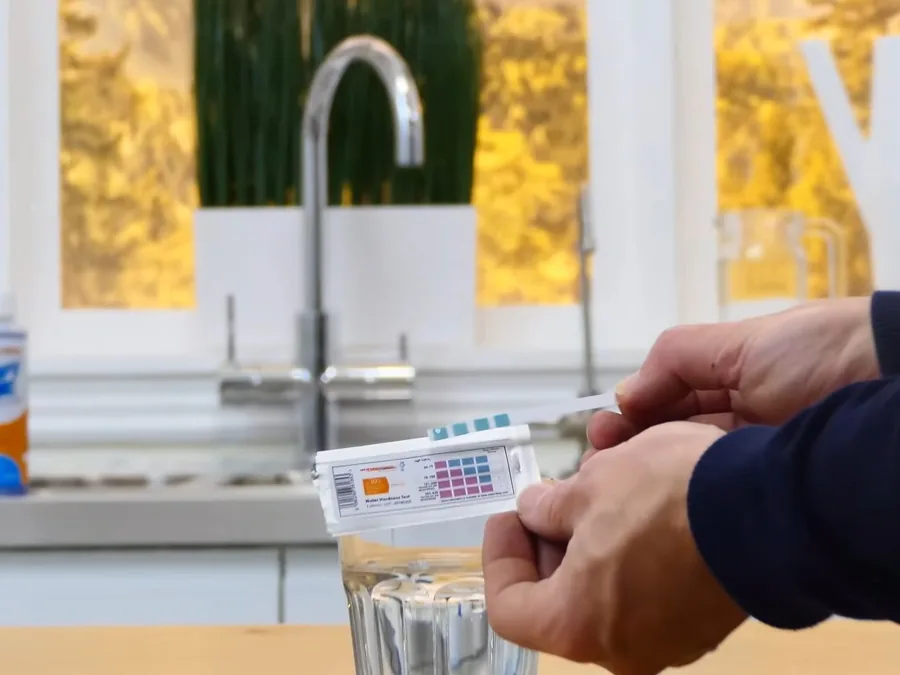
In-home water hardness test
We test your water at the tap using a digital hardness meter and test strips. Testing at the tap rather than relying on city averages gives us your actual supply conditions, which can vary by neighborhood and time of year. Homes served by Global Water Resources in Verrado may test differently than homes on City of Buckeye water in Sundance or Tartesso. The test takes about 15 minutes.
Household usage and system sizing
We calculate your daily water usage based on household size and habits, then size the softener to your actual hardness number. For most Buckeye households of 3 to 5 people at 20 to 25 GPG, a 48,000 to 64,000 grain system is appropriate. Larger households or homes with higher hardness readings need 80,000 grain or twin-tank configurations. We explain every sizing decision before you commit to a system.
Soft water loop inspection
Most Buckeye homes built after 2000 have a pre-plumbed soft water loop near the water heater, a dedicated supply line connection that makes softener installation straightforward. We check whether your home has one during the estimate visit. If no loop exists, we can install one at the same appointment, typically adding 1 to 2 hours of work.
Existing softener assessment
If you have a softener that isn't performing, we inspect the resin bed condition, the brine tank, the control valve, and the regeneration cycle settings. Hard water getting through a softener often signals exhausted resin, a failing control valve, or a regeneration schedule that doesn't match current water usage. Repair costs typically run $100 to $350 depending on the component. We'll tell you honestly when replacement makes more sense than repair.
Installation methods we use
Ion-exchange softener installation on existing loop
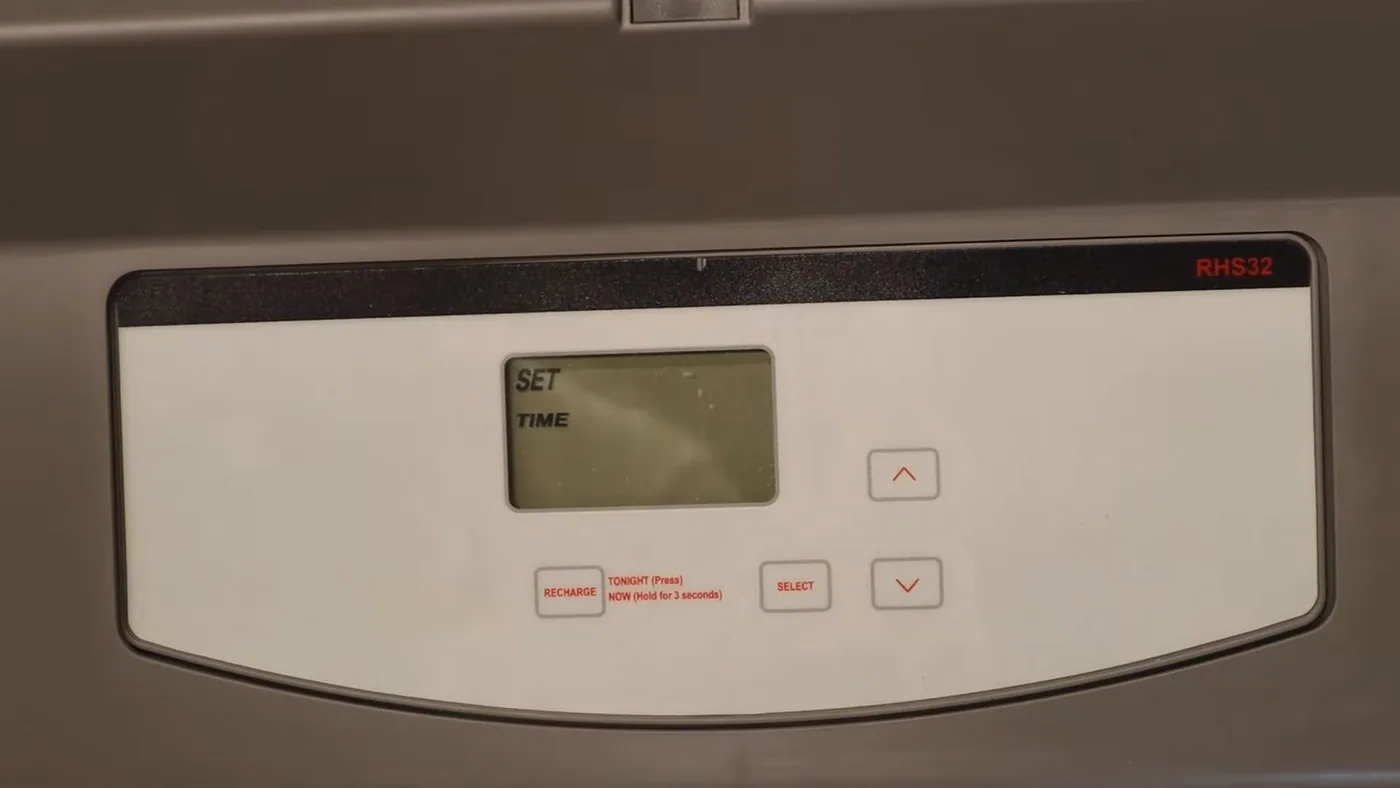
For homes with a pre-plumbed soft water loop, installation typically takes 2 to 4 hours. We connect the softener to the loop supply and return lines, install the drain connection for regeneration water, set up the brine tank with an initial salt charge, and program the control valve with a regeneration schedule calibrated to your household's usage and water hardness. We run the first regeneration cycle before leaving to confirm everything functions correctly.
Soft water loop installation (homes without pre-plumbed loop)
Homes without a pre-plumbed loop need additional plumbing to route the supply line through the softener before it reaches the water heater and house distribution. This typically involves running new supply line from the main supply, through the softener, and back to the water heater and distribution lines. Exterior hose bibs are kept on the hard water side of the loop so irrigation and outdoor use don't consume softened water.
Regeneration programming and initial setup
After installation, we program the control valve with a time-based or demand-initiated regeneration schedule, set the salt dose per regeneration cycle, and explain how to monitor salt levels and adjust settings if household water use changes. We also provide guidance on the initial salt type to use for Buckeye's water chemistry.
Cost of water softener installation in Buckeye
Typical price ranges (2026)
| Scenario | Typical Range | Notes |
|---|---|---|
| Softener installation (home with existing loop) | $1,800–$3,500 | 32,000-64,000 grain system for most Buckeye households |
| Softener installation with new loop added | $2,800–$5,500 | Includes loop plumbing + softener; varies by home layout |
| Twin-tank or high-capacity system | $3,500–$6,000+ | Larger households, very high hardness, or continuous soft water demand |
| Existing softener repair | $100–$400 | Resin, control valve, brine tank, or regeneration cycle issue |
System prices vary based on grain capacity, brand, and whether a soft water loop needs to be added. All estimates are free. We carry equipment from multiple manufacturers and recommend based on your actual hardness readings and household usage, not on margins.
Many Buckeye homeowners pair a water softener with an under-sink reverse osmosis system for drinking water, and with a water heater flush or anode rod replacement to clear existing scale before the softener goes in.
Frequently asked questions about water softeners in Buckeye
How hard is the water in Buckeye, AZ?
Buckeye groundwater typically tests at 15 to 30 GPG, well above the national average of about 10 GPG. The City of Buckeye relies almost entirely on groundwater rather than Colorado River surface water, which drives the high mineral content. At 15 to 30 GPG, Buckeye water falls in the very hard to extremely hard range by Water Quality Association standards.
What size water softener do I need for a Buckeye home?
Sizing depends on household size and your actual tested hardness level. For a household of 4 people with 25 GPG water, you typically need a 48,000 to 64,000 grain system. Most Buckeye homes fall in this range. We test your water and calculate your specific sizing at the estimate visit, rather than guessing from city averages.
Does my Buckeye home already have a soft water loop?
Most homes in master-planned Buckeye communities built after 2000 were pre-plumbed with a soft water loop, including most homes in Verrado, Sundance, Tartesso, Sienna Hills, Westpark, and Festival Foothills. A soft water loop makes installation straightforward, typically 2 to 4 hours of labor. If your home doesn't have one, we can install it at the same visit.
Should I also get a reverse osmosis system?
A water softener and an RO system solve different problems. The softener protects plumbing and appliances by removing hardness minerals from the whole-house supply. An RO system removes dissolved solids and other contaminants from drinking water at a single under-sink point of use. In Buckeye's high-TDS groundwater environment, most households benefit from both. The softener installs first; the RO connects downstream from the kitchen cold supply.
How often does a water softener need salt?
In Buckeye's hard water conditions, most softeners use salt faster than in softer-water markets. A typical household of 3 to 4 people with 25 GPG water uses 15 to 30 pounds of salt per month, though this varies by system size, efficiency, and actual water use. We set the regeneration schedule at installation and adjust it after the first few weeks based on your usage.
Will a water softener affect my pool or lawn irrigation?
Softened water should not go to outdoor irrigation or pool auto-fills. The sodium from regeneration can damage plants and grass over time. Most Buckeye homes with soft water loops already have outdoor hose bibs on the hard water side of the loop, bypassing the softener. If your home lacks this separation, we add a bypass for exterior hose connections during installation.
Related Services
Plumbing in your area
Water softener installation in Buckeye and the West Valley
Free in-home water test. System sized to your actual hardness and household usage. Serving Buckeye, Verrado, Goodyear, Avondale, Surprise, and the surrounding West Valley.
(623) 284-0371