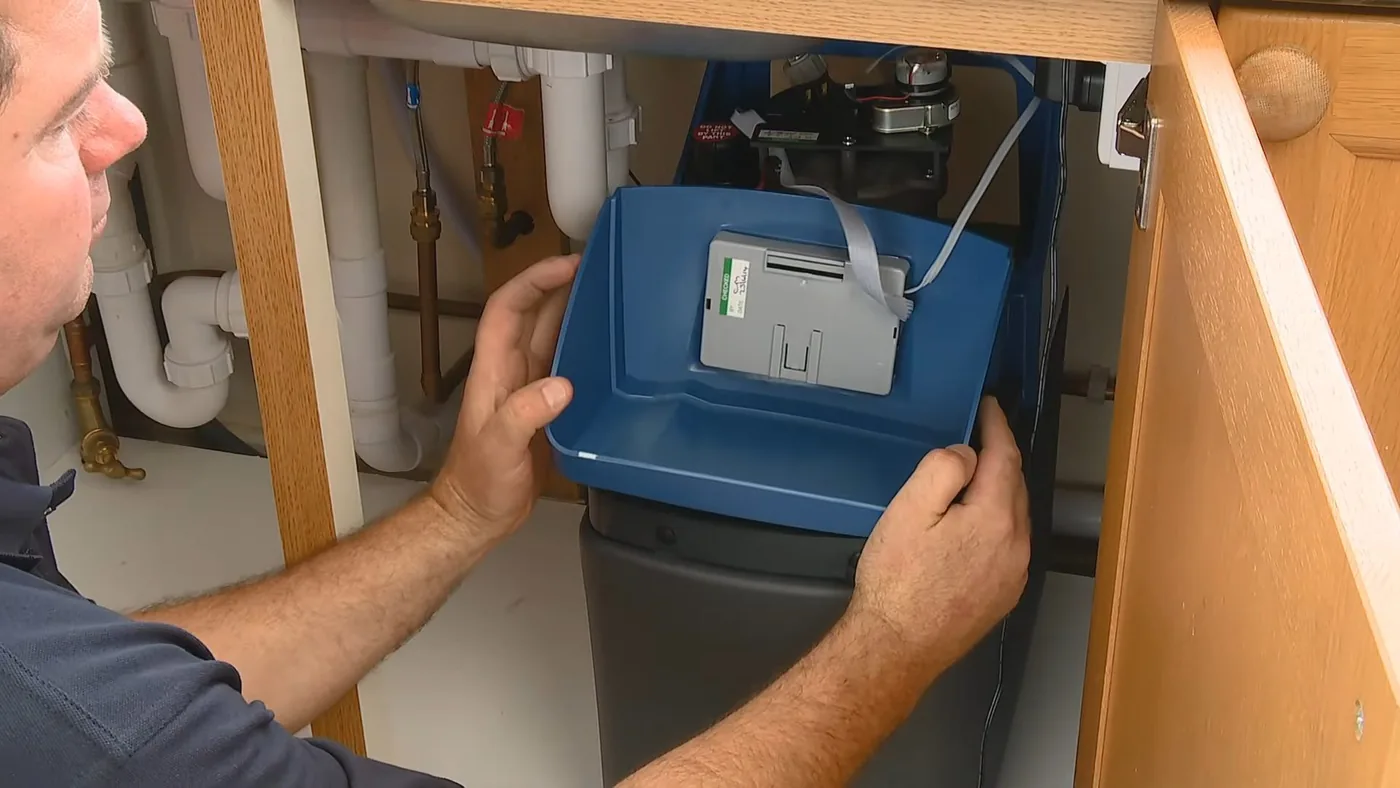
Water softener installation in Buckeye, AZ costs more than the national average, and for good reason. Buckeye's groundwater runs at 22 to 30 grains per gallon (GPG) of dissolved calcium and magnesium, among the highest hardness levels in the Phoenix metro. A system sized for the national average of 10 GPG simply won't keep up with what comes out of your tap here. You need more grain capacity, which means higher system cost, but also means the investment pays off faster in reduced appliance wear and maintenance.
This guide breaks down what you'll actually pay in Buckeye in 2026, what drives the cost up or down, and whether you need to add a soft water loop to your home before the softener can go in.
What a water softener installation costs in Buckeye
Installed cost varies primarily by system grain capacity and whether your home already has a pre-plumbed soft water loop. Most master-planned Buckeye communities built after 2000 have a loop. Older homes and rural properties often don't.
| Scenario | Typical Installed Cost | Notes |
|---|---|---|
| 32K grain system (homes with loop) | $1,800–$2,200 | Adequate for 1-2 people at Buckeye's hardness; undersized for most households |
| 48K grain system (homes with loop) | $2,100–$2,800 | Right size for 3-4 people at 22-30 GPG; most common Buckeye installation |
| 64K grain system (homes with loop) | $2,500–$3,500 | For larger households, high-demand use, or homes above 25 GPG |
| Any size + new soft water loop added | Add $800–$3,500 | Loop cost varies by home layout and distance from main supply |
| Twin-tank or high-capacity system | $3,500–$6,000+ | For large households, very high hardness, or continuous soft water demand |
A 48K grain system is the most common installation in Buckeye households of three to four people. At 25 GPG, a household of four using 75 gallons per person per day needs a system capable of handling 52,500 grains between regeneration cycles. A 48K grain system covers that with enough margin for peak demand days.
Why Buckeye homes need bigger (and more expensive) systems than the national average
System sizing is based on a simple formula: household daily water use (gallons per person per day) multiplied by the number of people, multiplied by the water hardness in GPG, multiplied by 7 (days between regeneration cycles). At the national average of 10 GPG, a family of four needs about a 21,000-grain system. At Buckeye's 25 GPG, the same household needs a 52,500-grain system. The math is direct: harder water means bigger system, and bigger systems cost more.
Beyond system size, Buckeye homes without a pre-plumbed soft water loop need additional plumbing to route the supply line through the softener. A soft water loop installation typically adds $800 to $3,500 to the project cost depending on how far the loop needs to run from the main supply and through which spaces in the home. Most Buckeye master-planned communities built after 2000 have a loop pre-plumbed near the water heater, making installation straightforward. Older homes near downtown Buckeye, or rural properties in Tonopah and Liberty, typically don't.
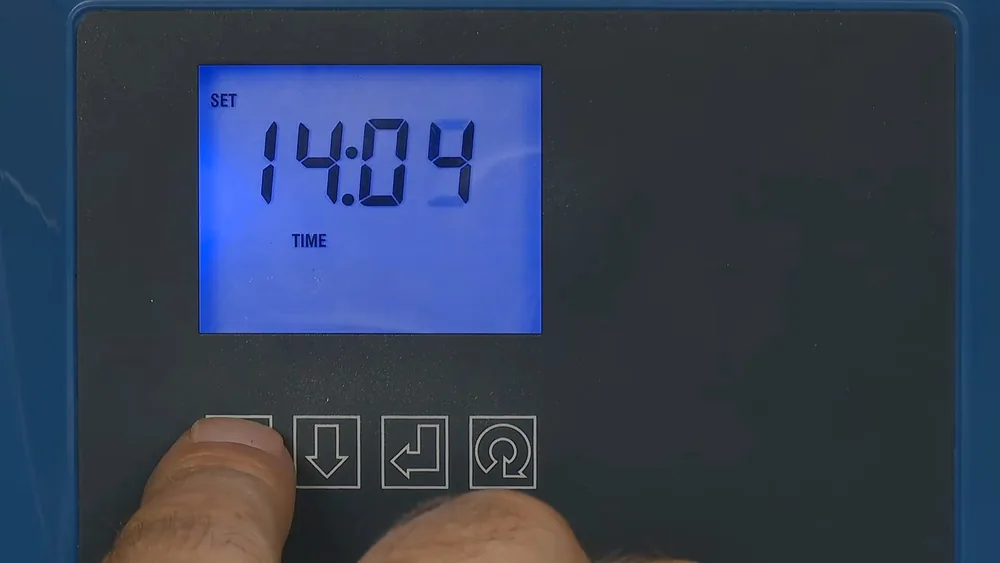
Does my Buckeye home have a soft water loop?
A soft water loop is a set of plumbing connections, typically visible as two 3/4-inch stubs or capped connections near the water heater in the utility closet or garage. If you see a bypass valve and two side-by-side connections that aren't connected to anything, your home is pre-plumbed for a softener.
Verrado, Sundance, Tartesso, Sienna Hills, Westpark, Festival Foothills, and most other Buckeye master-planned communities built after 2000 have loops pre-installed. Sun City Festival Del Webb homes have them throughout. If you're unsure, a plumber can confirm at the estimate visit. If a loop doesn't exist, installing one at the same appointment as the softener is the most cost-efficient approach.
What the sizing formula actually means for your home
The formula is straightforward. Multiply the number of people in your household by 80 (a reasonable daily gallons-per-person estimate for Arizona households). Multiply that result by your water hardness in GPG. Multiply by 7 days. The result is the minimum grain capacity you need between regeneration cycles.
For a Buckeye household of four at 25 GPG: 4 x 80 x 25 x 7 = 56,000 grains. A 48K grain system handles this with occasional more-frequent regeneration during peak weeks; a 64K system handles it comfortably without any adjustment. Given Buckeye's hardness variability between 22 and 30 GPG by season and service zone, sizing to 64K is worthwhile for households at the high end of that range.
The cost of not softening: what hard water does to your home
The financial argument for water softening in Buckeye is straightforward. A water heater in an unsoftened Buckeye home typically fails in 6 to 9 years rather than the manufacturer's 12-plus-year rating. At a replacement cost of $1,200 to $2,400, that's one full premature water heater replacement per household. Faucet cartridges in hard water markets fail in 3 to 6 years rather than 8 to 12 years. Dishwashers and washing machines lose efficiency as heating elements scale up. Showerheads and aerators need cleaning or replacement frequently.
A properly maintained water softener eliminates all of these accelerated wear cycles. For most Buckeye households, the appliance protection value alone covers the cost of the softener within 5 to 7 years, before counting soap and detergent savings and reduced fixture maintenance.
Should you add a reverse osmosis system at the same time?
A water softener and a reverse osmosis (RO) system solve different problems. The softener removes hardness minerals from your whole-house supply, protecting plumbing and appliances. An under-sink RO system removes a much broader range of dissolved solids, chloramines, and other contaminants from your drinking water at the kitchen faucet. In Buckeye's high-TDS groundwater environment, both provide measurable benefits, and installing them together is common.
An under-sink RO system in Buckeye adds $350 to $750 to the project cost at the same installation visit. Pairing softener installation with RO at the same time also means the RO membrane operates with pre-softened water, extending membrane life compared to an RO on unsoftened Buckeye groundwater.
Get your water tested before buying a system. On-site hardness testing takes 15 minutes and confirms your actual GPG rather than relying on city averages, which can vary between service zones and seasons in Buckeye. We test at every softener estimate visit at no charge.
Free water test and softener estimate in Buckeye
We test your water on-site, size the system to your actual hardness, and give you a written estimate before any work begins. Serving all of Buckeye, Verrado, Goodyear, Avondale, Surprise, and the West Valley.
✆ Call (623) 284-0371or request a free estimate online
Related: Water softener installation in Buckeye · Signs your Buckeye home is being damaged by hard water · Water softener vs. reverse osmosis: which does Buckeye need?