Water filtration in Buckeye: what it does and where it fits
Water filtration and water softening are complementary systems that address different problems. A water softener removes the calcium and magnesium that cause hardness, scale, and mineral buildup throughout the home's plumbing and appliances. Water filtration removes other contaminants: particulates, chloramines, organic compounds, bacteria in some applications, and additional dissolved minerals that a softener doesn't target.
In Buckeye, the water treatment challenge is layered. The City of Buckeye draws its supply almost entirely from groundwater, which carries high mineral content, elevated total dissolved solids, chloramines used for disinfection, and occasional fine particulates from the aquifer source. A complete treatment approach typically addresses these in sequence: sediment filtration to protect downstream equipment, carbon filtration to remove chloramines and organic compounds, a water softener to address hardness, and an under-sink reverse osmosis system for drinking water. Not every household needs all four stages, but Buckeye's water quality profile means that treating only one aspect leaves other issues unaddressed.
We assess your water quality, identify what you're trying to achieve, and recommend the appropriate system or combination of systems. We don't recommend equipment you don't need.
How we assess your water quality before recommending a system
We test before we recommend. Water filtration equipment that isn't matched to what your water actually contains is money spent on the wrong problem.
In-home water test
We test your water at the tap for hardness, total dissolved solids, chloramine presence, pH, and any specific parameters relevant to your home's situation (iron level for well-adjacent properties, for example). The test takes 15 to 20 minutes and gives us actual measurements for your specific supply, not citywide averages that may not reflect your address.
Existing equipment check
For homes that already have some water treatment equipment in place, we check the condition and performance of existing softeners, filters, or conditioning systems before recommending additions. A poorly maintained softener or an exhausted filter cartridge can make downstream water quality worse than no treatment at all. We address existing equipment issues before adding new stages.
Treatment train recommendation
Based on test results and your household goals, we recommend the right combination of treatment stages. For most Buckeye homes on city water, the recommended sequence is: sediment pre-filter at the main supply line, then carbon filtration for chloramine removal, then a water softener for hardness, with an under-sink reverse osmosis system for drinking water. Not every home needs all four stages, and we never recommend equipment that your test results don't justify.
Types of water filtration we install
Sediment filtration
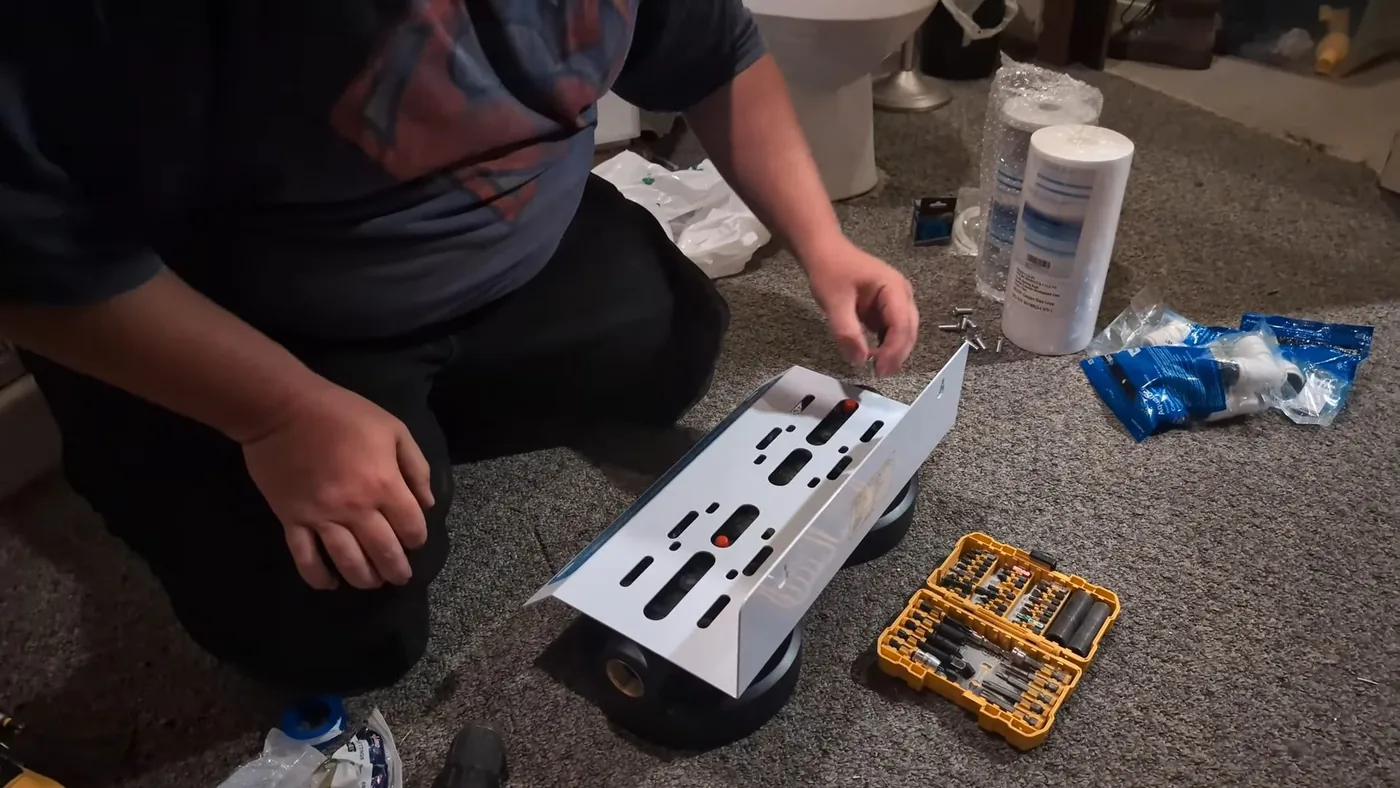
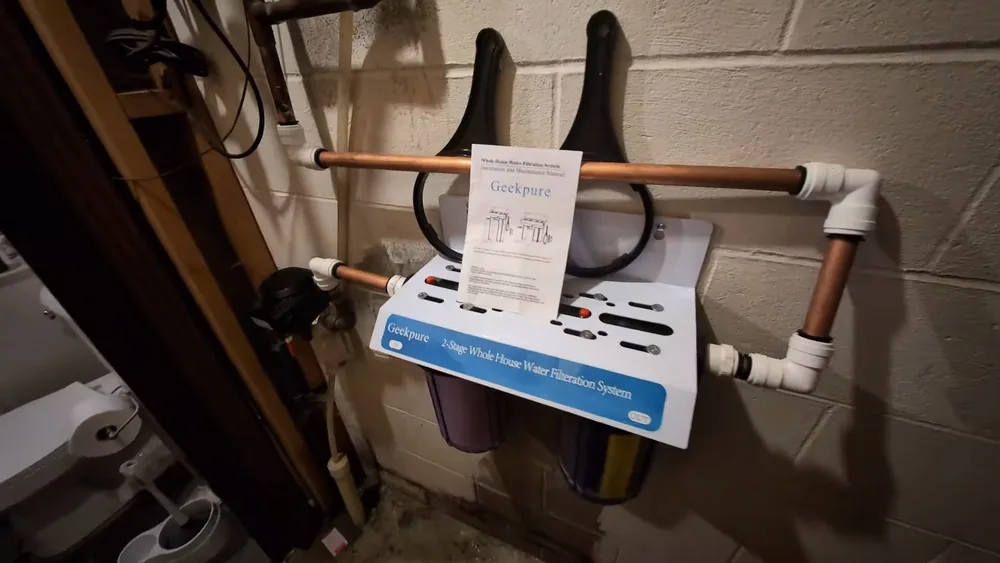
A sediment filter is a cartridge-based filter housing installed on the main supply line before other treatment equipment. It removes fine sand, mineral particles, and particulates from the water supply before they reach softener resin beds, carbon filter media, or RO membranes. In Buckeye, a 5-micron whole-house sediment filter is a standard first stage before any downstream treatment system. Sediment filter cartridges are one of the least expensive maintenance items in a water treatment setup and are replaced every 3 to 6 months depending on local water turbidity.
Carbon block and activated carbon filtration
Whole-house carbon filter systems use activated carbon media to adsorb chloramines, chlorine, volatile organic compounds, and disinfection byproducts from the full household water supply. The City of Buckeye uses chloramines rather than free chlorine for disinfection, so filters must use carbon media specifically rated for chloramine reduction. We verify media compatibility before recommending any system for Buckeye's water chemistry. Carbon filtration improves the taste and odor of tap water throughout the home, not just at one fixture.
UV water treatment
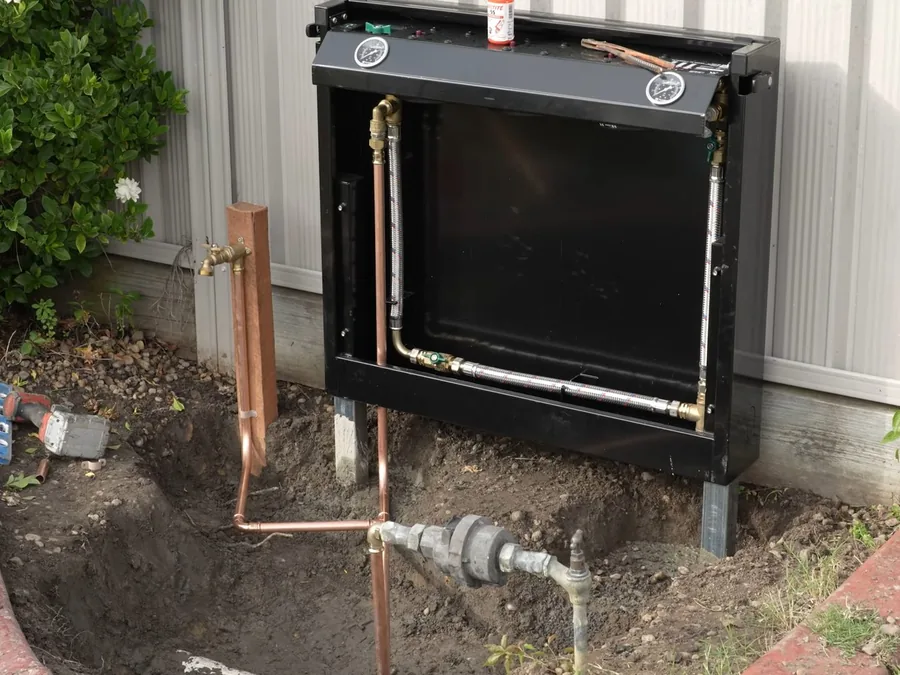
UV (ultraviolet) treatment uses UV light to inactivate bacteria, viruses, and protozoa in the water supply without adding chemicals. It's relevant for Buckeye homes on private wells or where water quality testing has revealed microbiological concerns. UV treatment is not appropriate for turbid water and should always be installed downstream of sediment filtration. UV lamps require annual replacement to maintain effectiveness.
Iron and manganese filtration
For homes on private wells or in areas where groundwater testing shows elevated iron or manganese, specialized filter media or oxidizing filter systems can remove these metals. Iron staining on sinks, showers, and laundry is a visible sign of iron in the supply. We test for iron and manganese before recommending iron-specific filtration, since standard carbon filters are not designed for iron removal.
Cost of water filtration installation in Buckeye
Typical price ranges (2026)
| System | Typical Range | Notes |
|---|---|---|
| Whole-house sediment filter (single housing) | $175–$325 | First-stage pre-treatment; cartridge replacement every 3 to 6 months |
| Whole-house carbon filter system | $400–$900 | Chloramine and organic compound removal; cartridge every 6 to 12 months |
| Sediment plus carbon combo system | $500–$1,100 | Pre-treatment pair for softener or RO protection |
| UV treatment system | $500–$1,200 | Annual lamp replacement included in first-year price |
| Iron or manganese filter system | $800–$2,500 | Requires water test for iron level; media replacement schedule varies |
Water filtration systems are sized based on the home's water test results and flow rate requirements. We test your water before recommending specific systems. No permit is required for standard point-of-entry filter installation in Buckeye.
Related: water softener installation for hardness removal, reverse osmosis installation for drinking water treatment, and water heater repair for appliances affected by untreated water quality.
Frequently asked questions about water filtration in Buckeye
What does a whole-house water filter do that a softener doesn't?
A water softener removes calcium and magnesium specifically. A whole-house carbon filter removes chloramines, chlorine, volatile organic compounds, and some disinfection byproducts. A sediment filter removes particulates. UV treatment inactivates microbiological contaminants. Each addresses different water quality issues and works best in combination with the others.
Does Buckeye tap water have chlorine or chloramines?
The City of Buckeye uses chloramines rather than free chlorine for disinfection. Chloramines require carbon filter media specifically rated for chloramine reduction; standard chlorine filters are less effective. We verify filter media compatibility with Buckeye's water chemistry before recommending any system.
What is a sediment filter and does my Buckeye home need one?
A sediment filter removes particulates from the supply before they reach downstream treatment equipment. In Buckeye, sediment pre-filtration is particularly important before carbon filters and RO membranes, since Buckeye's groundwater can carry fine mineral particles that would quickly foul downstream media. A whole-house 5-micron sediment filter extends the life of softener resin and RO membranes significantly.
How often do whole-house water filters need maintenance in Buckeye?
Sediment cartridges: every 3 to 6 months. Carbon block cartridges: every 6 to 12 months. UV lamps: annually. Iron and manganese media: variable by system type. We provide a specific maintenance schedule at installation based on your system type and Buckeye's local water chemistry.
Can a whole-house water filter replace a water softener in Buckeye?
No. Carbon and sediment filters do not remove water hardness. Hardness removal requires an ion-exchange softener or a salt-free conditioning system. In Buckeye's 15 to 30 GPG environment, a filter alone will not prevent scale buildup in water heaters, fixtures, or appliances. Filtration and softening address different water quality issues and work best together.
Related Services
Plumbing in your area
Water filtration installation in Buckeye and the West Valley
Sediment, carbon, UV, and iron filtration for Buckeye's groundwater. We test before we recommend. Serving Buckeye, Goodyear, Tonopah, Liberty, and the surrounding West Valley.
(623) 284-0371