What reverse osmosis does for Buckeye drinking water
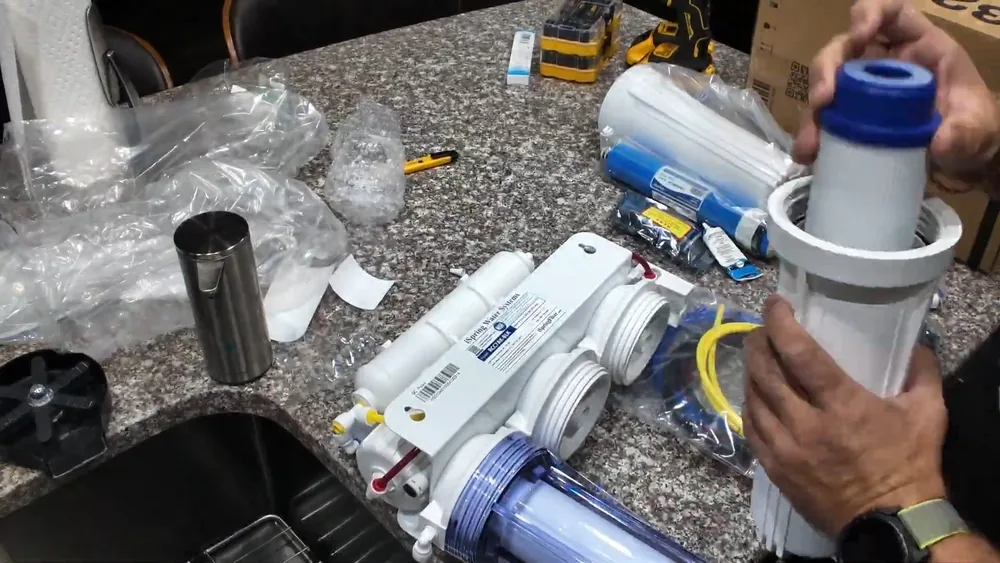
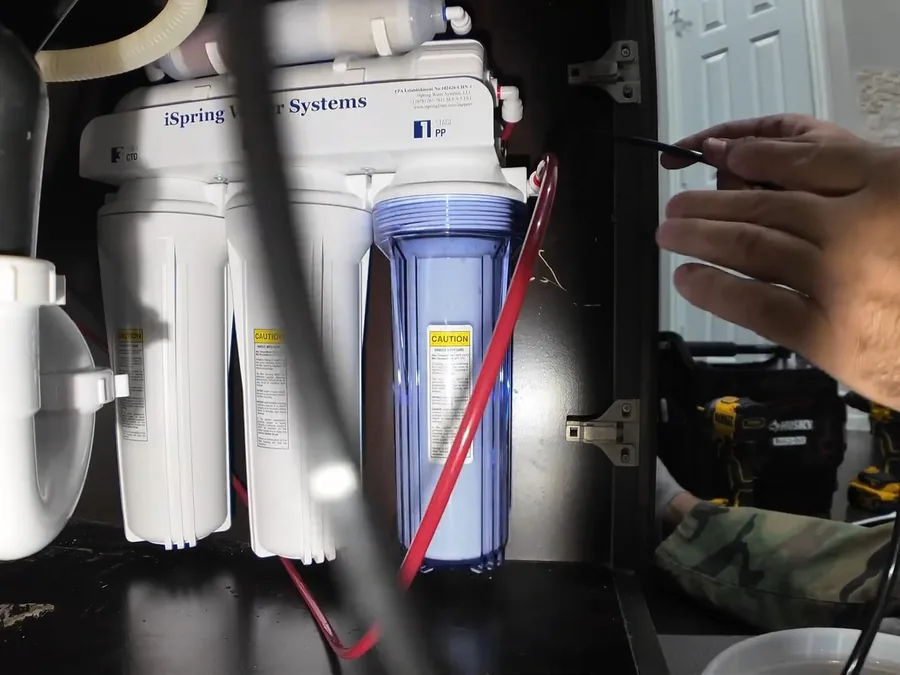
Reverse osmosis forces pressurized water through a semi-permeable membrane that blocks most dissolved solids, contaminants, and heavy metals, producing clean water on the permeate side and flushing the concentrated reject water down the drain. An under-sink RO system typically includes a sediment pre-filter to remove particulates, one or more carbon pre-filters to remove chloramines and chlorine, the RO membrane, a post-carbon polishing filter, and a storage tank that holds 2 to 4 gallons of treated water for on-demand dispensing through a dedicated faucet at the sink.
For Buckeye homeowners, RO addresses water quality characteristics that a water softener does not. A softener removes calcium and magnesium but doesn't remove chloramines (the disinfectant the City of Buckeye uses), nitrates, arsenic at trace levels, or the broader dissolved solids content of the groundwater. Buckeye's groundwater TDS can run 400 to 800 parts per million or higher depending on the source well and season. RO reduces that to 20 to 50 PPM at the output, which is well within drinking water taste standards.
A water softener and an RO system work together well: the softener protects the RO membrane from premature fouling by hardness minerals, extending membrane life and maintaining higher flow rates than an RO system on unsoftened hard water. Many Buckeye homeowners install both at the same time.
What we check before installation
Water pressure check
RO membranes require a minimum of 40 PSI inlet pressure to operate efficiently. Buckeye homes typically have 50 to 80 PSI at the kitchen cold supply, which is within range. If the home has a pressure regulator set low, or if flow restriction from pipe scale or a partially-closed shutoff reduces pressure at the RO inlet below 40 PSI, we recommend a booster pump to maintain efficient membrane operation and acceptable production rate.
Under-sink space and drain proximity
We confirm there is adequate cabinet space under the kitchen sink for the storage tank and filter housings, that a drain connection point is accessible for the RO reject water line, and that a 3/8-inch supply connection is available on the cold water supply line under the sink. We also verify whether the homeowner wants to add an ice maker connection at the same time, which affects the tank size we recommend.
Faucet hole in sink deck
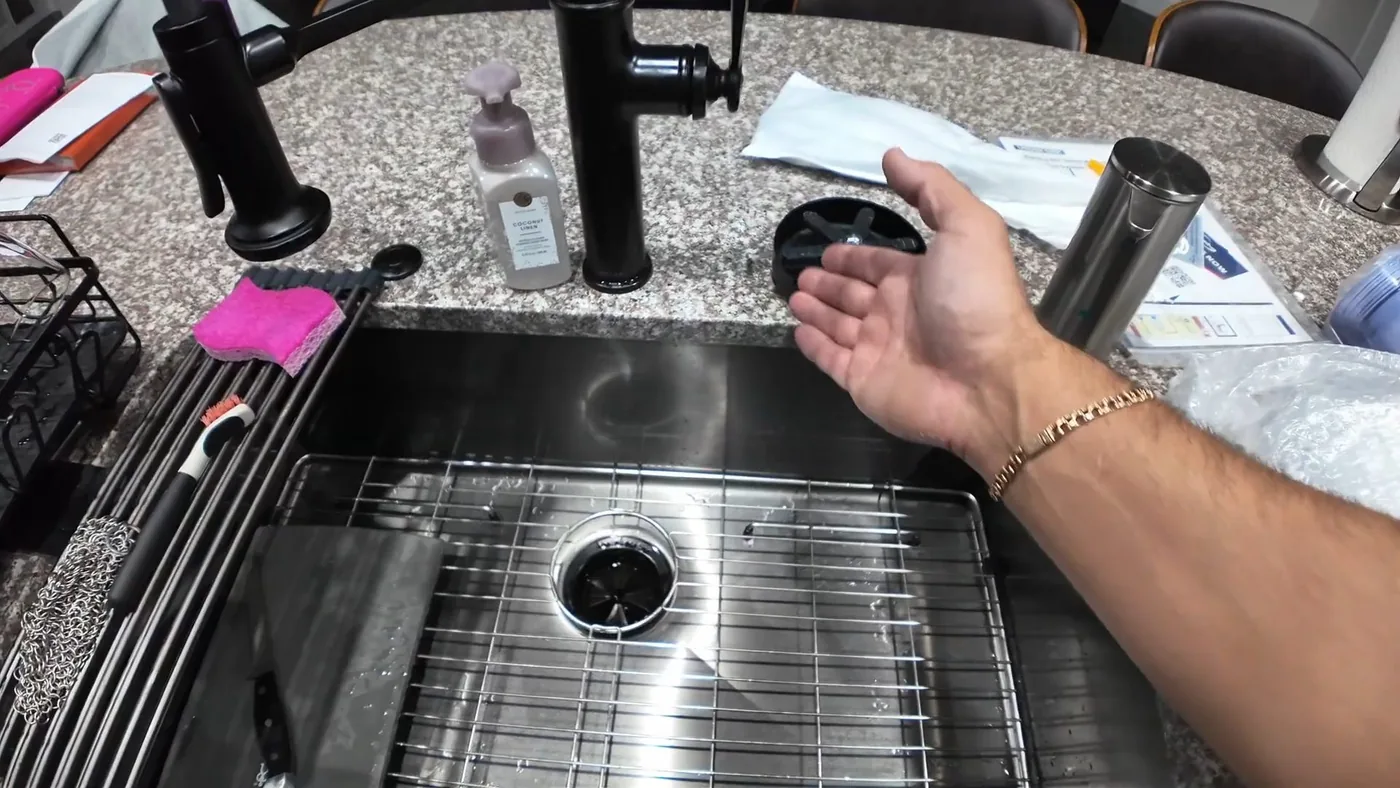
Under-sink RO systems include a dedicated faucet that mounts through the sink deck or countertop. Most Buckeye kitchen sinks have a pre-drilled hole for a soap dispenser or sprayer that can accommodate the RO faucet without additional drilling. If no hole exists, we drill one as part of the installation.
Installation and ongoing service
Standard under-sink RO installation
Installation involves connecting the RO system's inlet saddle valve to the cold water supply line, mounting the filter housings and tank, connecting the drain line, installing the RO faucet through the sink deck, and flushing the new system to rinse the filter media before first use. A standard installation takes 2 to 3 hours. We test the output TDS with a meter at completion so you have a baseline reading for future comparison.
Ice maker connection
Adding an ice maker connection at the time of RO installation requires a tee fitting on the RO permeate output line and a supply line run from the kitchen to the refrigerator location. We size the storage tank appropriately for combined sink and ice maker demand. For refrigerators located at the kitchen island or across from the main sink run, the supply line typically runs through the cabinet kick plate area.
Filter replacement service
In Buckeye's groundwater conditions, pre-filters (sediment and carbon stages) need replacement every 6 to 12 months, and the RO membrane every 2 to 3 years. We offer annual filter replacement service and provide a filter replacement schedule at installation. We also re-test output TDS at filter replacement visits to confirm the membrane is still performing correctly.
Cost of reverse osmosis installation in Buckeye
Typical price ranges (2026)
| Service | Typical Range | Notes |
|---|---|---|
| Standard 4-5 stage RO installation | $350–$750 | Includes system, dedicated faucet, and installation |
| RO with booster pump | $550–$950 | For homes with pressure below 40 PSI at the kitchen cold supply |
| Ice maker connection (add-on) | $75–$175 | Added at same appointment; tank sizing may need to increase |
| Annual pre-filter replacement service | $150–$250 | Sediment and carbon stages; includes output TDS test |
| RO membrane replacement | $200–$350 | Typically every 2 to 3 years in Buckeye's water conditions |
RO system installation requires no City of Buckeye permit for a standard under-sink point-of-use system. We provide a written filter replacement schedule at installation based on your water quality and household usage.
Pairs well with: water softener installation to protect the RO membrane and extend filter life, and whole-house water filtration for pre-treatment upstream of the softener and RO.
Frequently asked questions about reverse osmosis in Buckeye
Does Buckeye need both a water softener and a reverse osmosis system?
They serve different purposes. A softener removes calcium and magnesium from the full household supply to protect plumbing and appliances. An RO system removes a broader range of dissolved solids, chloramines, and other contaminants from drinking water at the kitchen sink. In Buckeye's high-TDS groundwater environment, most homeowners benefit from both. The softener goes in first and protects the RO membrane from premature hardness fouling.
How long do reverse osmosis filters last in Buckeye's groundwater?
Pre-filters (sediment and carbon) typically need replacement every 6 to 12 months in Buckeye's groundwater. The RO membrane typically lasts 2 to 3 years. For homes with a water softener in good working order, pre-filter life can extend somewhat. We provide a filter replacement schedule at installation based on your water test results.
Can a reverse osmosis system be connected to a refrigerator ice maker?
Yes. Many under-sink RO systems can be teed off to supply a refrigerator ice maker and water dispenser. This requires a supply line run from the RO output to the refrigerator and may require a larger storage tank than a sink-only system.
What does Buckeye's groundwater actually contain?
Buckeye draws its supply almost entirely from groundwater. The water typically contains elevated hardness (15 to 30 GPG), high total dissolved solids from desert aquifer minerals, chloramines for disinfection, and trace naturally occurring groundwater constituents. An RO system with a good carbon stage removes chloramines, which a water softener does not address.
How much does reverse osmosis installation cost in Buckeye?
A standard 4-5 stage under-sink RO system including installation typically runs $350 to $750. Systems with a booster pump run $550 to $950. Adding a refrigerator ice maker connection typically adds $75 to $175. Annual filter replacement service runs $150 to $250 depending on the filter set.
Related Services
Plumbing in your area
Reverse osmosis installation in Buckeye and the West Valley
Under-sink RO systems sized and installed for Buckeye's groundwater. Filter replacement service included. Serving Buckeye, Goodyear, Avondale, Surprise, and the surrounding West Valley.
(623) 284-0371