Most Buckeye homeowners know their water is hard. Fewer realize how much damage it is actively doing, right now, to fixtures, appliances, and plumbing they can't see. At 22 to 30 grains per gallon, Buckeye's groundwater deposits minerals at a rate that puts visible and invisible damage on a faster timeline than almost any other metro in the country. These six signs tell you whether your home is already paying the price.
Sign 1: White crust on faucets, showerheads, and tile grout
The white or off-white mineral crust that accumulates around faucet bases, on showerhead nozzles, inside dishwasher spray arms, and along tile grout lines is calcium carbonate scale, a direct deposit of the minerals carried in Buckeye's groundwater. In homes without water softeners, this buildup begins forming within months of installation of any new fixture. It is not just cosmetic: scale deposits inside showerhead nozzles reduce flow pressure and eventually block individual jets. Scale inside dishwasher spray arms produces uneven water distribution and poorer cleaning performance. Grout-line scale is extremely difficult to remove without damaging the grout itself.
The speed of accumulation tells you something important. Scale that appears within weeks of cleaning is a signal of very high hardness. Scale that takes months to return suggests moderate hardness in the 12 to 15 GPG range. Buckeye's 22 to 30 GPG produces the former.
Sign 2: Your water heater is only 6 to 9 years old and already failing
The national average water heater lifespan is 12 to 15 years. In Buckeye homes without water softeners, tank water heaters regularly fail at 6 to 9 years. The cause is mineral scale accumulating on the heating element and at the tank bottom. A layer of scale insulates the element from the water, forcing the unit to run longer and hotter to reach the target temperature. This accelerates corrosion, increases energy consumption, and shortens the service life.
The symptoms of a scale-compromised water heater are specific: rumbling or popping sounds during heat cycles (scale being forced through as water heats), longer recovery times after hot water use, discolored or rust-tinged hot water in severe cases, and eventually a unit that simply stops producing adequate hot water despite the thermostat setting being unchanged. If your water heater is under 10 years old and exhibiting any of these symptoms, hard water scale is likely the cause.
Sign 3: Faucet aerators clog every few months
Aerators are the small mesh screens threaded onto faucet spouts that mix air with the water stream for a smooth flow. In soft water markets, aerators last years without maintenance. In Buckeye's hard water environment, aerators clog with mineral deposits within months of installation or cleaning. A faucet that had good pressure last season but now flows in a narrow stream or sprays sideways has a clogged aerator. Removing and soaking the aerator in vinegar or replacing it with a new one typically restores full flow immediately.
The frequency with which your aerators clog is a useful hardness indicator. Aerators that need cleaning every 2 to 3 months suggest water above 20 GPG. Aerators that last 6 to 12 months before clogging suggest moderate hardness. For Buckeye homes at the high end of the 22 to 30 GPG range, aerator maintenance is a recurring monthly task without a softener.
Sign 4: Soap that won't lather and a film left behind
Calcium and magnesium ions in hard water react with soap to form calcium soap, an insoluble compound that doesn't lather and leaves a film or residue on skin, hair, and dishes. Buckeye homeowners who have moved from softer-water markets often notice this first in the shower: soap that takes significantly more product to produce a lather, and a slippery film on skin after rinsing that doesn't go away with additional rinsing. This isn't a quality issue with the soap; it's a chemistry issue with the water.
The same reaction affects dishwasher performance. Hard water produces the spots and film on glassware that remain after dishwasher cycles even when rinse aid is used. It produces stiff laundry from the calcium soap deposits left in fabric fibers after washing. Both dishwasher spotting and laundry stiffness are direct indicators of water above 10 GPG, and at Buckeye's 22 to 30 GPG, both are typically significant and visible.
Sign 5: Appliances wearing out faster than expected
Dishwashers, washing machines, coffee makers, ice makers, and any appliance that heats or circulates water all have internal components that scale accumulates on. Heating elements in dishwashers and washing machines scale up the same way water heater elements do, reducing efficiency and shortening service life. Ice makers develop scale deposits on the water distribution tubes that affect ice production and ice cube clarity. Coffee makers develop scale on the heating elements and in the water pathways that slow flow and affect temperature.
The appliance that shows hard water damage most predictably is the dishwasher. Scale accumulation inside the tub, on the spray arms, and on the heating element typically becomes visible within 2 to 3 years in Buckeye homes without softeners. Dishwashers that are leaving more spots and film on dishes year over year, despite not changing detergent or rinse aid, are exhibiting progressive hard water scale effects.
Sign 6: Faucet cartridges and valve seats failing in 3 to 4 years
Faucet cartridges in soft water markets last 8 to 12 years. In Buckeye's hard water, cartridges in unsoftened homes typically need replacement in 3 to 6 years. Mineral scale deposits inside the cartridge body and on the valve seat degrade the ceramic disc or rubber seat faster than normal wear would, eventually producing a dripping faucet that doesn't respond to tightening the handle. Handles that become increasingly stiff or difficult to move are also a sign of scale working into the cartridge mechanism.
If you're replacing faucet cartridges every few years across multiple faucets in your home, you're spending on a maintenance cost that a water softener eliminates. The cartridge replacement cost per visit is $100 to $275. Multiple faucets per year across a 10-year softener ownership period represents several thousand dollars in avoidable maintenance.
What to do about hard water damage in your Buckeye home
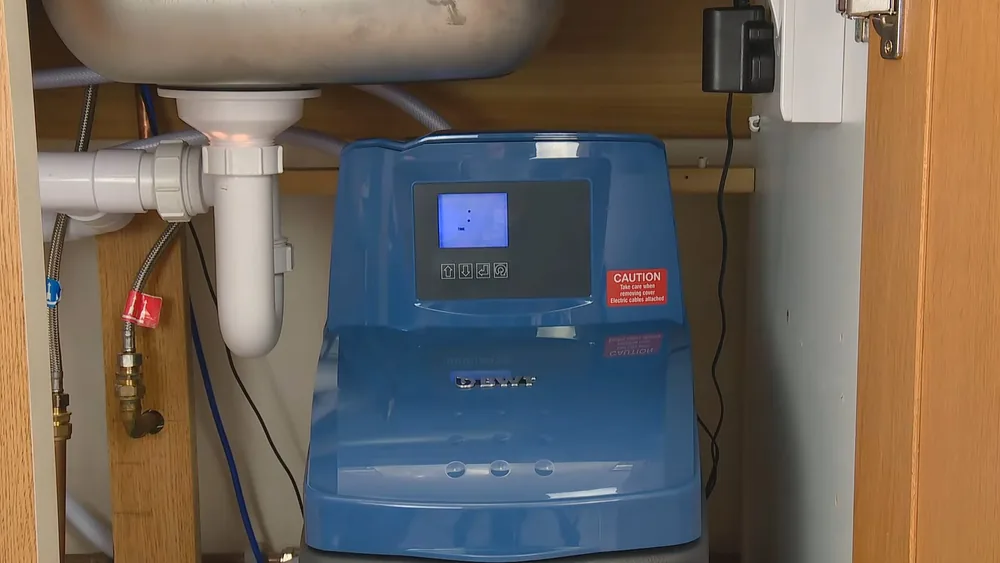
An ion-exchange water softener sized for Buckeye's 22 to 30 GPG water stops all six of these damage categories at the source. Scale stops forming on fixtures and inside appliances. Soap lathers normally. Faucet cartridges last at their rated lifespan. The water heater accumulates scale at the rate it would in a soft-water market, pushing its service life back toward the 12-plus-year range rather than the 6-to-9-year hard water failure window.
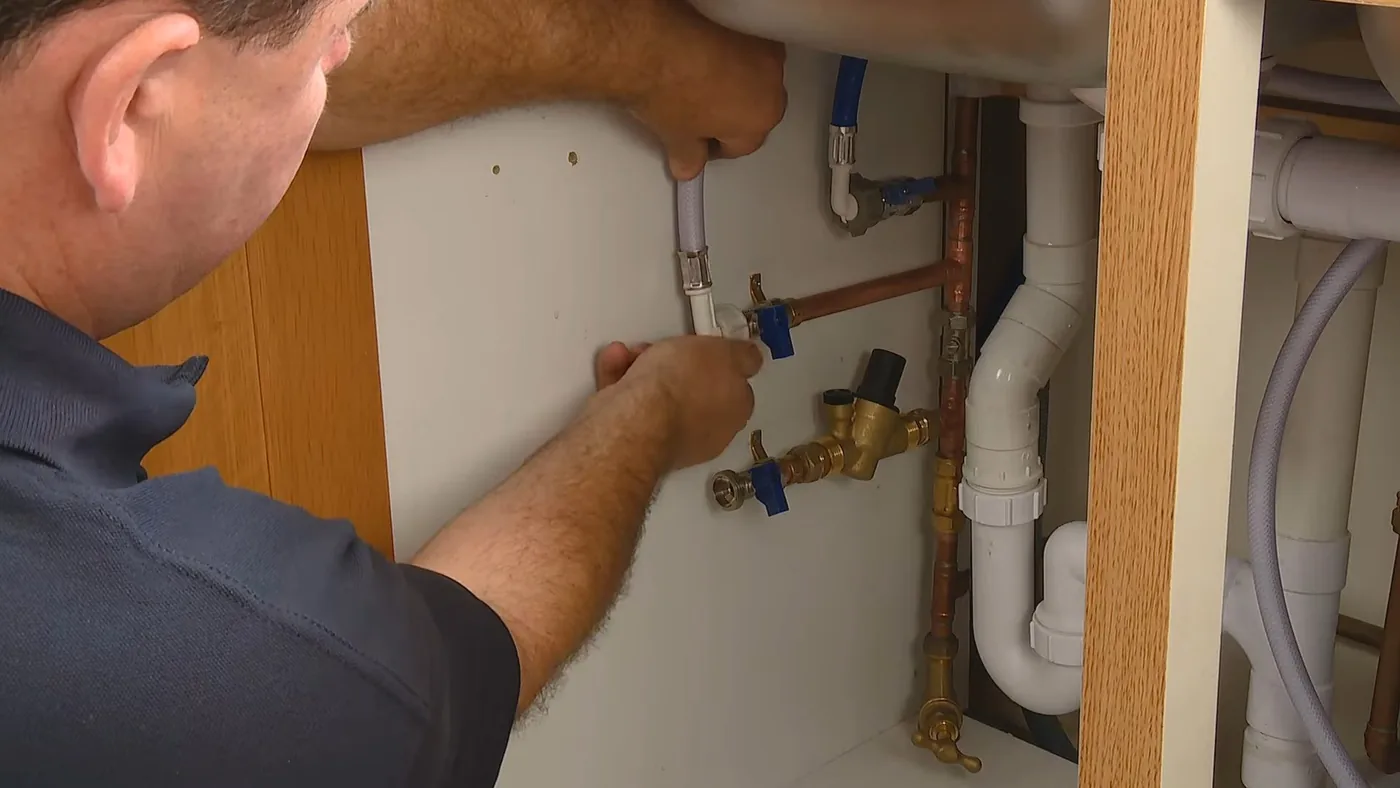
Most Buckeye homes built after 2000 have a pre-plumbed soft water loop near the water heater that makes softener installation a 2 to 4 hour job. The installed cost of a 48K or 64K grain system appropriate for Buckeye's hardness typically runs $2,100 to $3,500 depending on system size and loop configuration.
Free water test and softener estimate in Buckeye
We test your water on-site, size the system to your actual hardness, and install at the existing loop in most cases. Serving all of Buckeye, Verrado, Goodyear, and the West Valley.
✆ Call (623) 284-0371or request a free estimate online
Related: Water softener installation in Buckeye · Water softener installation cost in Buckeye (2026) · Water softener vs. reverse osmosis: what Buckeye homes actually need