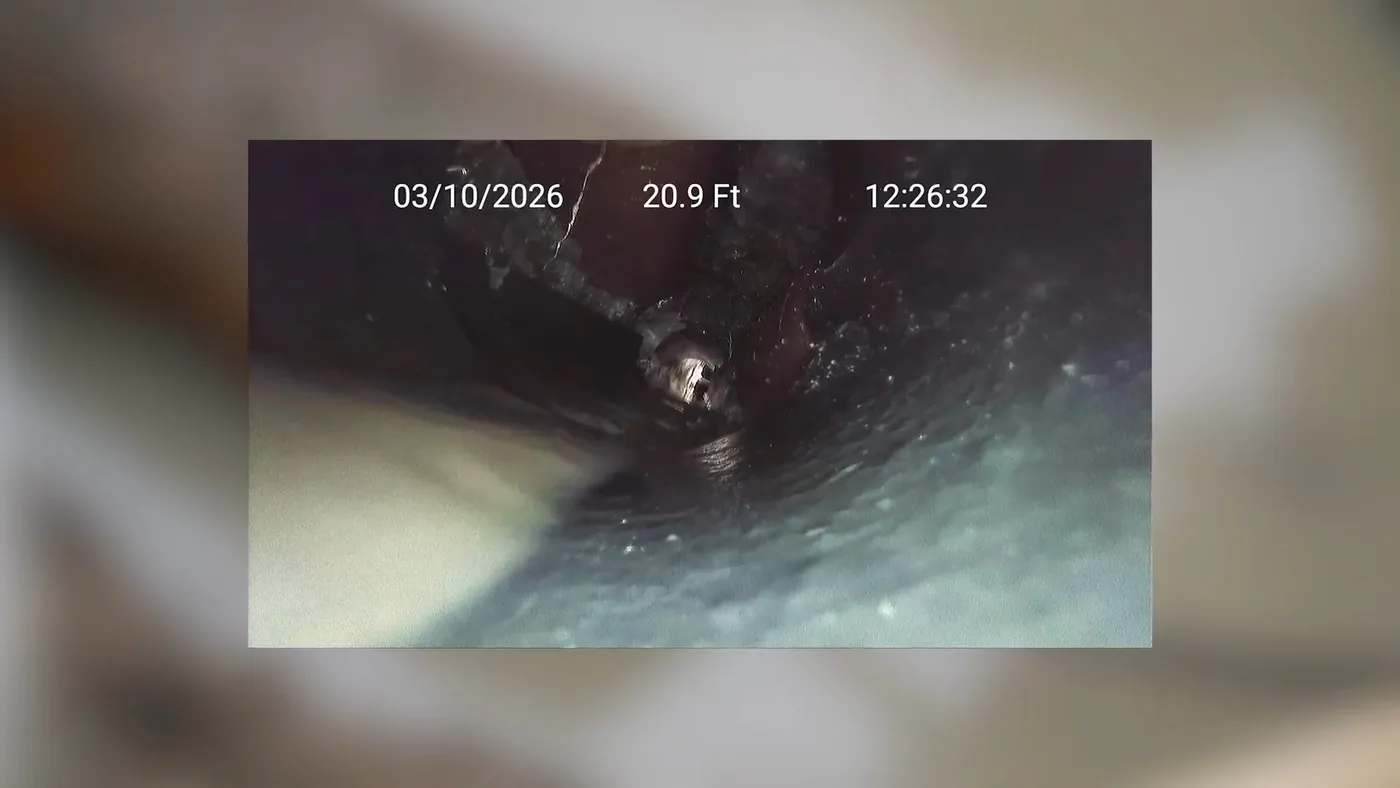
What sewer line damage looks like in Buckeye and the West Valley
A sewer line failure begins with symptoms that look like persistent drain problems: slow drains across multiple bathrooms, intermittent backups, and occasional sewage odor near ground level. In later stages it becomes unmistakable: multiple fixtures backing up simultaneously, visible wet areas along the sewer line path in the yard, and in severe cases, foundation effects from moisture accumulating in the soil.
Buckeye's master-planned communities built from 2004 to 2015 used PVC sewer pipe throughout. PVC is durable and largely resistant to root intrusion, but it can crack from soil settling, caliche layer movement, and construction damage. Older sections of Buckeye near downtown and along Watson Road may still have clay or cast-iron sewer pipe from pre-2000 construction, which is more susceptible to both root intrusion and corrosion damage over time.
Desert soil conditions also contribute to sewer line stress. Caliche layers common in Buckeye's desert alluvium shift more abruptly than uniform soil when wet-dry cycles occur during monsoon season, stressing pipe joints in longer sewer runs, particularly on larger lots in western Buckeye and unincorporated areas near Tonopah and Liberty.
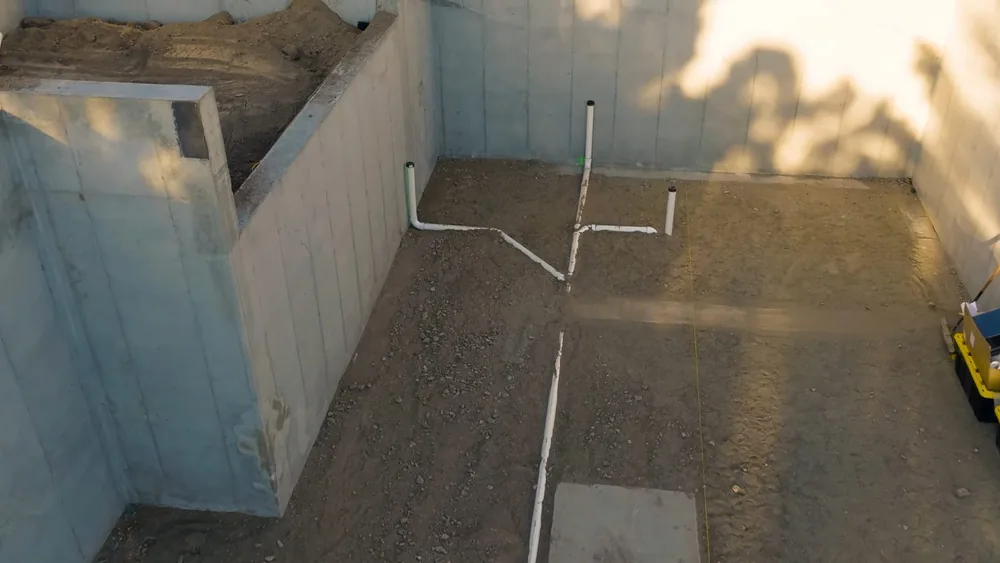
How we diagnose sewer line damage
Camera inspection
Camera inspection is the starting point for all suspected sewer line damage. A waterproof camera pushed through the cleanout gives us a real-time view of the pipe interior from the cleanout to the main sewer connection. We see the type and extent of damage: cracks, corrosion, root intrusion, offset joints, sagging sections, or collapse. We record the footage and show you exactly what we found before discussing repair options and costs.
Depth and location mapping
For repair planning, we identify the depth of the damaged section using a locating device paired with the camera. This is particularly important in Buckeye, where caliche soil layers can make excavation significantly more difficult at certain depths. Knowing the exact location and depth allows us to quote excavation work accurately and compare trenchless versus conventional repair costs honestly.
Smoke testing
When a sewage odor is reported but camera inspection doesn't identify a visible break, smoke testing introduces non-toxic smoke into the sewer line under light pressure. Smoke exits at any cracked joint, deteriorated cleanout gasket, or broken section, making the leak location visible above ground. Smoke testing also helps trace sewer line routes where the layout isn't documented.
Repair methods we use
Spot repair (excavation and pipe section replacement)
When camera inspection identifies a limited damaged section, a spot repair excavates directly above it, removes and replaces only the affected pipe segment, and restores the trench. Caliche soil at excavation depth adds time and cost in Buckeye compared to other markets, but it also tends to confine soil movement near the excavation, making backfill and compaction more predictable. Spot repairs address the specific failure without disturbing the rest of the line.
CIPP trenchless pipe lining
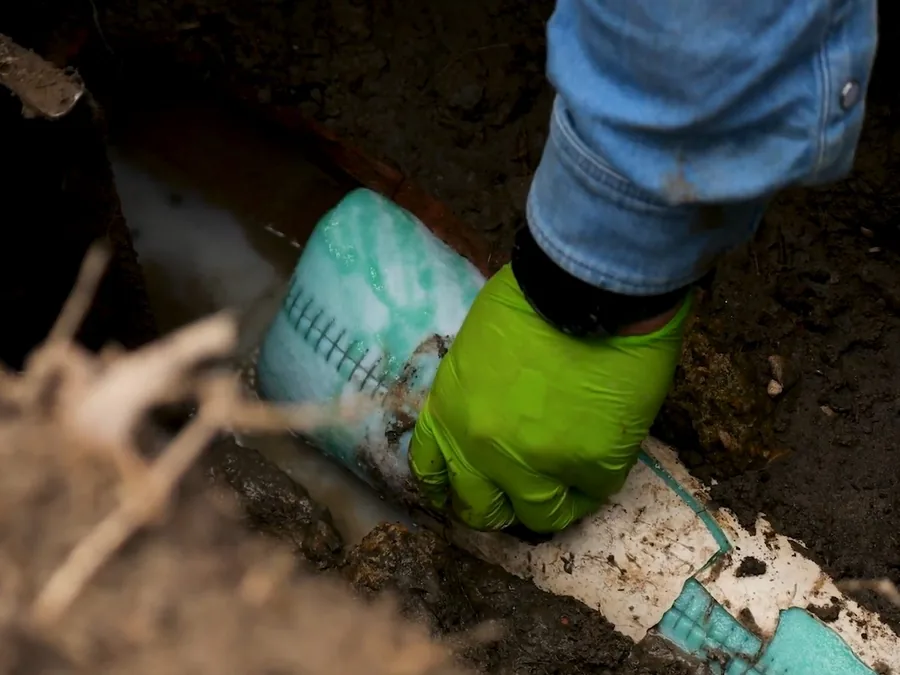
Cured-in-Place Pipe lining inserts a resin-saturated liner into the existing damaged pipe and cures it in place, creating a new structural pipe wall inside the old one. CIPP avoids excavation for most of the damaged run and restores flow capacity without disturbing landscaping, driveways, or hardscape above the line. It works well for cracked, corroded, or root-damaged sections with structural integrity remaining. We quote CIPP alongside the conventional excavation option so you can compare both.
Pipe bursting
Pipe bursting is a trenchless method that replaces the existing pipe by pulling a bursting head through it, fracturing the old pipe outward as a new HDPE pipe is pulled in behind the head. Access pits are required at each end of the replaced section. Pipe bursting is useful in Buckeye yards with established landscaping, pavers, or concrete hardscape above the sewer line where a full trench would be significantly more disruptive.
Cost of sewer line repair in Buckeye
Typical price ranges (2026)
| Service | Typical Range | Notes |
|---|---|---|
| Camera inspection | $150–$350 | Required first step; credited toward same-day repair |
| Spot repair (excavation) | $500–$2,500 | Limited section; caliche soil increases excavation cost |
| CIPP trenchless lining | $1,500–$5,000 | Length-dependent; avoids most excavation and surface disruption |
| Pipe bursting (full section) | $3,000–$8,000 | Full section replacement; two access pits required |
| Full excavation and replacement | $2,500–$10,000+ | Depth, length, caliche, and surface restoration all affect cost |
City of Buckeye plumbing permit is included in all sewer line repair quotes. We never start work without a written estimate you've approved. Camera inspection fee is credited toward repair when performed at the same visit.
Related work: full sewer line replacement when damage is extensive, hydro jetting for root intrusion without structural damage, and drain cleaning for blockages that don't require repair.
Frequently asked questions about sewer line repair in Buckeye
What are the signs of a damaged sewer line in Buckeye, AZ?
Multiple drains backing up simultaneously, slow drains across several bathrooms, sewage odor inside or outside the home, gurgling sounds from drains or toilets, wet patches or unusually lush plant growth over the sewer line path in the yard, and in severe cases, cracks near the sewer route.
Do tree roots damage sewer lines in Buckeye?
Yes. Desert trees including mesquite, palo verde, and oleander have aggressive root systems that seek water in drain pipes. Older Buckeye homes with clay or cast-iron sewer pipe near mature trees are the most common root intrusion candidates. Newer PVC lines in master-planned communities are less susceptible but not immune.
Does sewer line repair require a permit in Buckeye?
Yes. Sewer line repair requires a plumbing permit from City of Buckeye Development Services. We pull the permit, schedule the required inspection, and handle all coordination. You don't need to manage this separately.
What is CIPP pipe lining and is it right for my Buckeye sewer line?
CIPP lining inserts a resin-saturated liner into the damaged pipe and cures it in place, creating a new pipe wall inside the old one. It avoids most excavation and works for cracked, corroded, or root-damaged pipes with remaining structural integrity. We assess eligibility during camera inspection and quote CIPP alongside conventional excavation so you can compare both.
How much does sewer line repair cost in Buckeye, AZ?
Spot repairs on accessible sections typically run $500 to $2,500. CIPP lining runs $1,500 to $5,000 depending on length. Full section excavation and replacement runs $2,500 to $10,000 or more depending on depth, caliche, and surface restoration. Camera inspection at $150 to $350 is the required first step and is credited toward same-day repair.
Related Services
Plumbing in your area
Sewer line repair in Buckeye and the West Valley
Camera diagnosis before any repair. CIPP trenchless and spot repair options. Serving Buckeye, Goodyear, Avondale, Tolleson, Phoenix, and the surrounding West Valley.
(623) 284-0371