Buckeye's monsoon season runs from mid-June through September, bringing the most intense weather the West Valley sees all year. The combination of intense rainfall in short periods, straight-line winds, and sudden pressure changes in the water supply system creates a specific set of plumbing stresses that have nothing to do with hard water or heat. This checklist covers what to inspect and address before the first major storm of the season, and what to watch for during and after monsoon events.
What monsoon does to plumbing that ordinary weather doesn't
Three things happen during monsoon storms that specifically stress plumbing systems. First, the City of Buckeye water distribution system experiences pressure fluctuations during storm events as demand patterns shift rapidly and pump stations respond. These pressure surges propagate through service connections to homes and can stress already-weakened valves, fittings, and hose bibs. Second, rainfall that falls faster than the desert soil can absorb saturates the ground and can intrude into any exterior plumbing penetration, cleanout access point, or low-lying drain connection. Third, wind-driven debris and rapid temperature swings during storm passage stress UV-degraded outdoor plumbing components that were already near the failure threshold.
The plumbing failures that occur during monsoon season are almost never caused by the storm alone. The storm is the final stress event on a component that hard water, UV, or age had already weakened. Pre-season preparation identifies those components and addresses them before the first storm does.
Hose bibs and outdoor faucets: inspect before storm season
Hose bibs on south- and west-facing exterior walls are the outdoor plumbing component most at risk in the West Valley. A year of UV exposure degrades the rubber seat materials inside the valve. The first monsoon pressure surge of the season can convert a slow drip into an active leak on a bib that was already compromised. Before the monsoon arrives, check every outdoor hose bib:
- Turn each bib on and off fully and confirm the shutoff is complete with no drip from the spout.
- Check the vacuum breaker cap on each bib for cracking or brittleness. A vacuum breaker that drips from the side when the bib is open has a failed cap.
- Confirm that each bib has an interior shutoff valve inside the wall that fully closes. A seized interior shutoff is a problem you don't want to discover during an emergency.
A hose bib replacement takes 30 to 60 minutes and costs $150 to $325 installed. Done before the monsoon season, it's a planned maintenance item. Done during a monsoon emergency at 10 PM, it's an emergency call at emergency rates.
Pressure surge protection: what to check
If your home has a pressure reducing valve (PRV) on the main supply line, monsoon season is a good time to confirm it's functioning correctly. A PRV that has failed open can allow distribution system pressure surges to pass through to your home's supply unattenuated. Signs of a failing PRV include pressure that feels higher than normal at fixtures, or a pressure gauge reading above 80 PSI at the main. Normal residential supply pressure is 50 to 70 PSI.
For homes with a thermal expansion tank on the water heater, confirm the tank is not waterlogged (a waterlogged expansion tank feels heavy and solid when tapped rather than hollow at the top half). A waterlogged expansion tank can't buffer pressure surges and may allow pressure spikes to reach fixture valves during monsoon-related supply fluctuations.
Pool and irrigation prep for monsoon season
Before monsoon season, verify that your pool's drainage overflow path is clear. Monsoon rainfall can add several inches of water to a pool in a single storm event. If the pool's skimmer weir and overflow drainage aren't clear, pool water can overflow onto the deck and cause surface erosion and deck damage. Pool auto-fill valves should be confirmed working so the system can correct level after a heavy rain without overfilling.
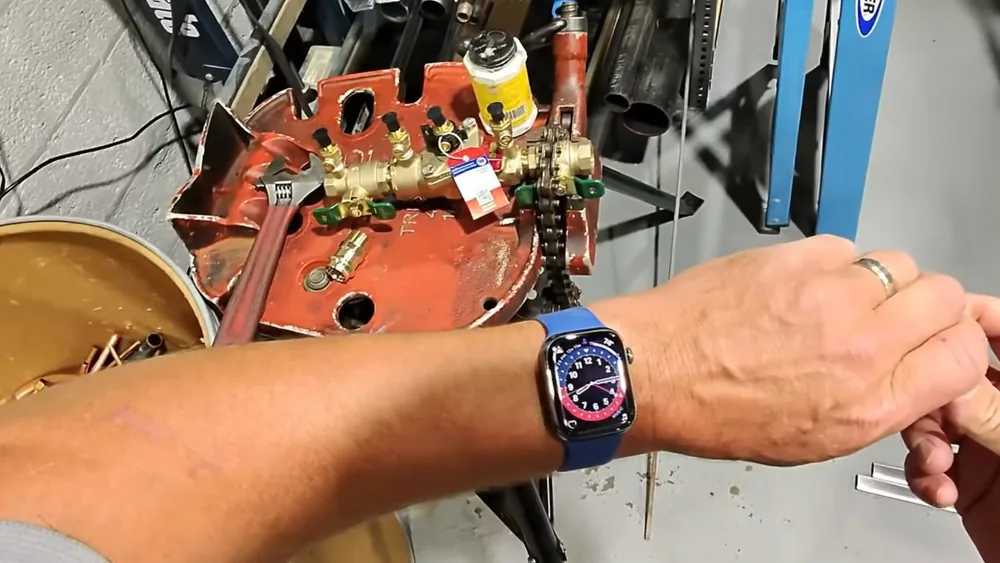
Irrigation system backflow prevention assemblies should be confirmed in working order before the monsoon season. Monsoon pressure fluctuations in the municipal supply are exactly the conditions where a marginal backflow assembly may fail to prevent reverse flow. If your irrigation system is due for its annual backflow assembly test under City of Buckeye's annual testing requirement, scheduling it before monsoon season rather than after is the safer approach.
Sewer and drain prep: flooding risk
In particularly intense monsoon rainfall events, storm drainage overwhelm can create back-pressure in residential sewer connections in low-lying areas of Buckeye. Homes near the Gila River corridor or in lower-lying Rio Bravo and southern Buckeye neighborhoods should confirm that any floor drains, utility room drains, or low-lying exterior drain connections have functioning drain protection. A drain plug that can be quickly installed in a floor drain is inexpensive insurance during an event where back-pressure might push wastewater backward through a low-lying drain connection.
Main sewer lines that have accumulated grease, root intrusion, or significant scale should be cleaned before storm season, not after. A compromised main sewer that handles normal daily flow adequately may back up when storm drainage adds surcharge load to the system. If you've noticed slow main drain performance or have had a main line cleaned within the past 2 to 3 years, pre-monsoon camera inspection is worthwhile.
What to do if a plumbing failure happens during a monsoon event
If a hose bib, supply line, or outdoor plumbing failure occurs during a storm, the first step is always to shut off the main water supply at the interior main shutoff valve. This stops flow to the failed component immediately regardless of outdoor conditions. Know where your main shutoff is before storm season. It's typically in the utility closet near the water heater in Buckeye master-planned homes, or in a garage utility area in older homes.
For plumbing emergencies during monsoon season, we dispatch on the same 24/7 basis as all other emergency calls. Storm conditions may affect response time. Shutting off the main supply and documenting the failure point (photos if safe to do so) is the most useful thing you can do while waiting for arrival.
Know where your main water shutoff is before storm season. For most Buckeye master-planned homes it's in the utility closet near the water heater. For older downtown Buckeye homes it may be at the meter box near the street or at a shutoff near the foundation.
Pre-monsoon plumbing inspection in Buckeye and the West Valley
Outdoor plumbing inspection, hose bib replacement, PRV check, and backflow testing. Available before monsoon season arrives. 24/7 emergency response during storm events.
✆ Call (623) 284-0371or request a free estimate online
Related: 24/7 emergency plumbing in Buckeye · Hose bib and outdoor faucet repair · How Arizona's sun and heat damage outdoor plumbing