Buckeye homeowners researching water treatment often land on the same question: water softener or reverse osmosis? Both address water quality problems, but they address different problems through different mechanisms, and the right answer for your home depends on what you're actually trying to fix. This guide explains exactly what each system does, where each one falls short, and why most Buckeye households benefit from both working together rather than choosing one over the other.
The core difference: whole-house scale protection vs. drinking water purity
A water softener protects your plumbing and appliances by removing hardness minerals from the entire household water supply before they can deposit scale. A reverse osmosis system produces purified drinking water at a single point of use (typically the kitchen faucet) by forcing water through a semi-permeable membrane that blocks dissolved solids, chloramines, and other contaminants. These are fundamentally different jobs, and each system only does its own job.
Understanding this distinction resolves most of the confusion around which system Buckeye homeowners need:
- If you want to stop scale from forming in your water heater, dishwasher, faucets, and shower: you need a water softener.
- If you want better-tasting drinking water with lower TDS and no chloramine flavor: you need a reverse osmosis system.
- If you want both: you benefit from both, and they work together rather than competing.
What a water softener does (and doesn't do)
An ion-exchange water softener replaces the calcium and magnesium ions that cause water hardness with sodium ions from a salt-charged resin bed. The process is highly effective at reducing water hardness to near zero at the point of use. Softened water no longer deposits calcium scale in water heaters, no longer leaves white residue on tile and fixtures, and allows soap to lather normally rather than forming calcium soap that leaves film on skin and dishes.
What a softener does not do: it does not remove total dissolved solids (TDS) from the water, because it replaces ions rather than removing them. It does not remove chloramines used for disinfection. It does not remove nitrates, perchlorate, or other non-hardness dissolved compounds. The sodium ions added to replace the calcium and magnesium represent a moderate sodium increase per liter of water (relevant for very sodium-restricted diets but not meaningful for most people). Softened water tastes different from hard water but not necessarily "better" in the way filtered water does.
For Buckeye's 22 to 30 GPG water, a properly sized water softener reduces scale formation in water heaters and appliances to essentially zero, extends faucet cartridge life to the manufacturer's rated lifespan, and eliminates the mineral deposits that stain tile grout and glass shower doors. This is a significant and measurable improvement in home maintenance.
What reverse osmosis does (and doesn't do)
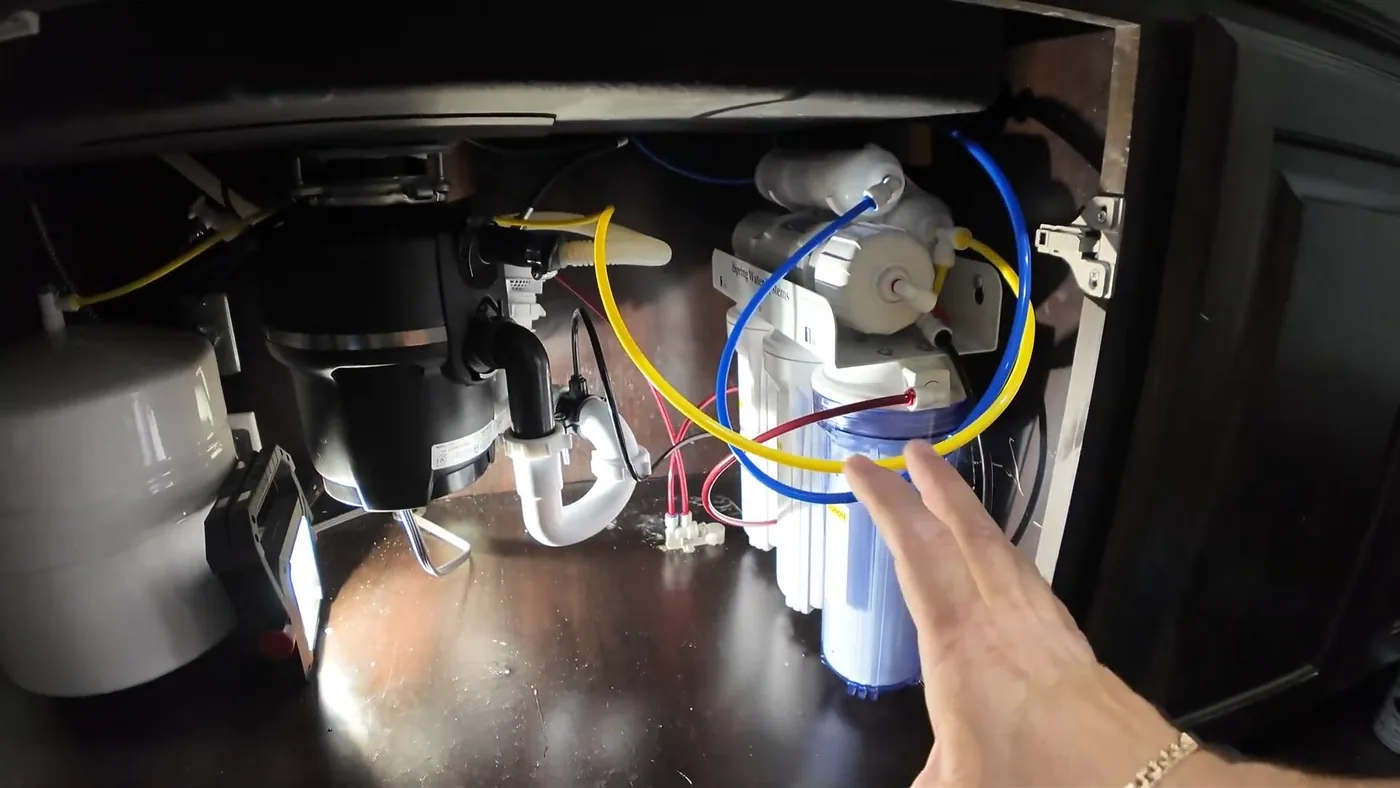
A reverse osmosis system forces pressurized water through a semi-permeable membrane with pores small enough to block most dissolved ions, molecules, and larger particles. The output at the dedicated RO faucet is water at 95 to 99 percent reduced TDS from the supply. At Buckeye's typical supply TDS of 400 to 800 PPM, RO output runs 20 to 50 PPM. Chloramines, nitrates, and most other dissolved contaminants are also reduced substantially by the membrane and carbon pre-filters.
What an RO system does not do: it does not treat the water for the rest of the household. A standard under-sink RO system produces 1 to 4 gallons per hour, stored in a small tank. This is sufficient for drinking water and cooking, but far from enough to supply dishwashers, showers, and water heaters. The hardness minerals that an RO membrane removes at the kitchen faucet are not removed anywhere else in the home. Your water heater, dishwasher, and shower fixtures still see the full hardness of the supply.
The salt-free softener question
Salt-free water conditioning systems, often marketed as "softeners," use a process called template-assisted crystallization (TAC) or similar technologies to change the form of hardness minerals rather than removing them. The minerals remain in the water but are converted to a microscopic crystal form that is less likely to deposit as scale. Salt-free systems require no salt, produce no waste water from regeneration cycles, and add no sodium to the supply.
The honest assessment for Buckeye's 22 to 30 GPG water: salt-free conditioners are less effective than ion-exchange softeners at Buckeye's hardness levels, particularly for water heaters and appliances where scale accumulation is the primary concern. Published peer-reviewed research on salt-free TAC systems shows meaningful scale reduction in some test conditions but inconsistent results at very high hardness levels. For Buckeye homes where hard water damage protection is the primary goal, a salt-based ion-exchange softener remains the most reliable option. Salt-free systems may appeal to homeowners with sodium concerns or those who want lower maintenance, with the understanding that the scale protection will be less complete than a traditional softener.
Why Buckeye homes benefit from both systems
In Buckeye's high-hardness, high-TDS groundwater environment, a softener and an RO system serve genuinely different and complementary roles. The softener protects the home's plumbing infrastructure and extends the life of every water-using appliance. The RO system provides clean, low-TDS drinking water and cooking water that the softener alone cannot deliver. Most Buckeye households who install both find the combination addresses every water quality concern they had, at a combined installed cost typically in the $2,500 to $4,500 range for both systems together.
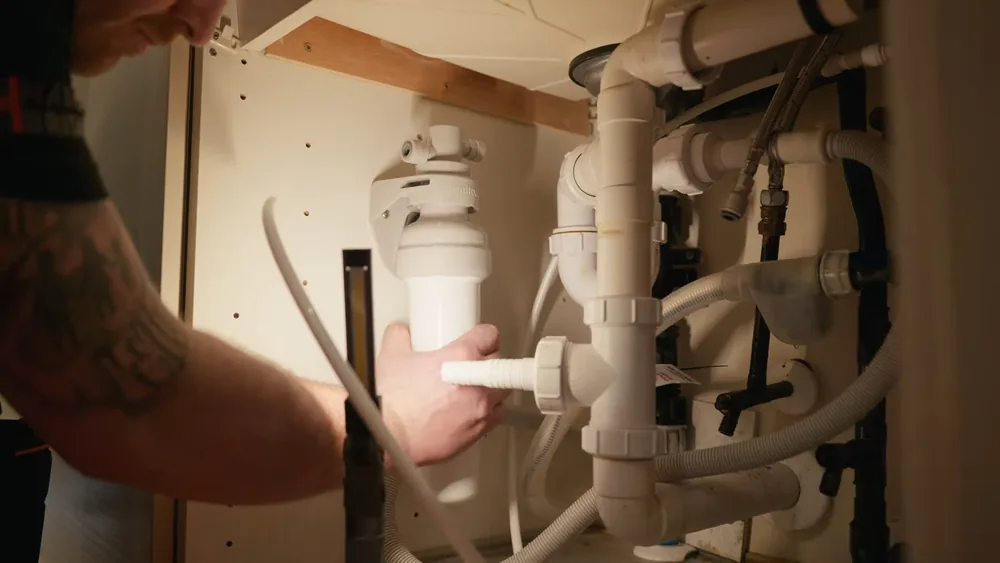
Installing them together at the same appointment is the most cost-efficient approach, since it saves a separate service call and allows the plumber so the RO system is positioned downstream of the softener, which extends membrane life by reducing the hardness load the membrane must handle.
An RO membrane lasts 2 to 3 years in Buckeye groundwater without a softener upstream. With a softener delivering pre-softened water to the RO, the membrane life extends to 3 to 4 years. The softener investment pays dividends in reduced RO maintenance as well as appliance protection.
Water softener and RO installation in Buckeye
On-site water testing, system sizing for 22-30 GPG groundwater, and same-day installation at the existing soft water loop. Serving all of Buckeye, Verrado, Goodyear, and the West Valley.
✆ Call (623) 284-0371or request a free estimate online
Related: Water filtration installation in Buckeye · Water softener installation cost in Buckeye (2026) · Reverse osmosis installation cost in Buckeye (2026)