
When replacement makes more sense than repair in Buckeye
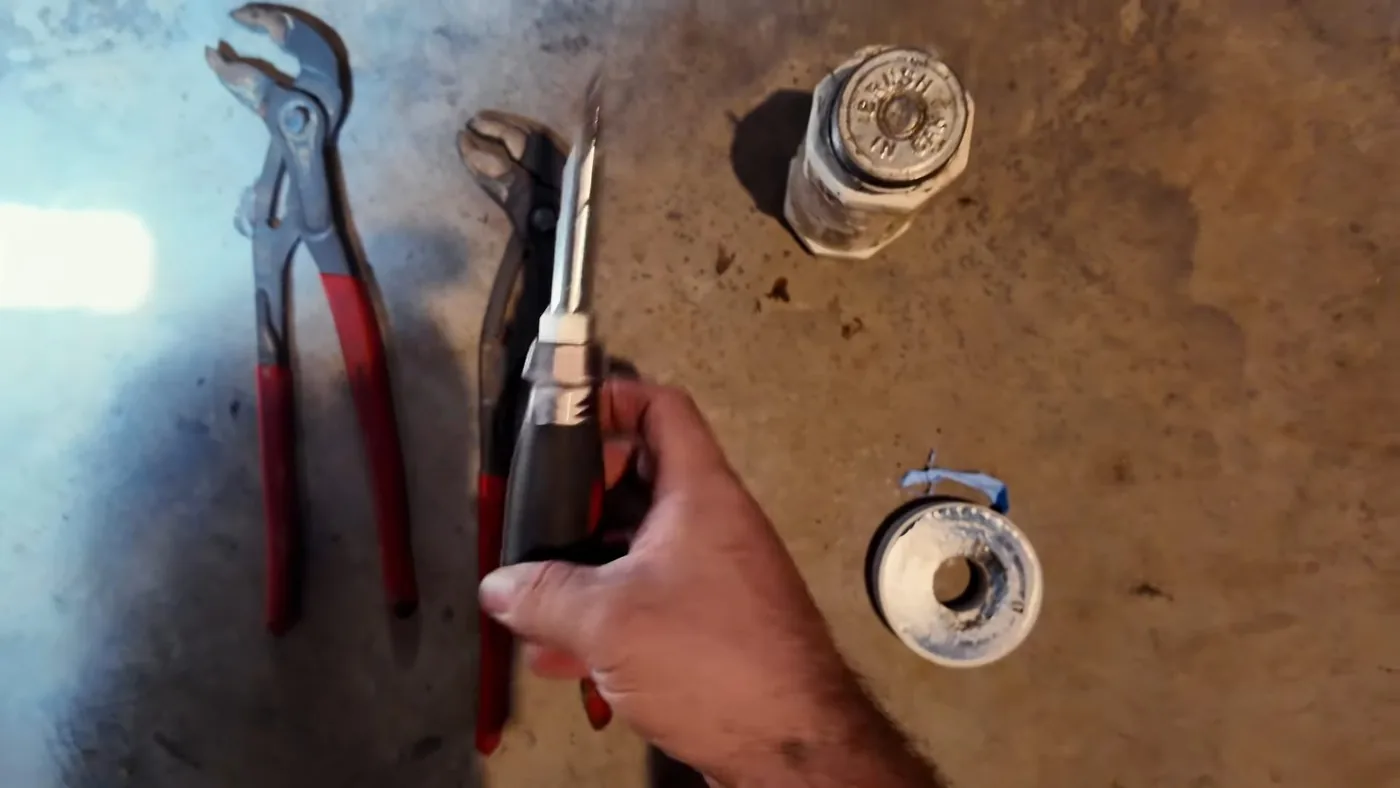
Water heaters in Buckeye have a shorter effective lifespan than in most of the country. Buckeye's groundwater runs at 15 to 30 grains per gallon of dissolved minerals. Inside a tank heater, those minerals fall out of solution as the water heats and accumulate as scale on the heating elements, the tank bottom, and internal surfaces. Over time, the scale insulates the elements, drives up energy consumption, and accelerates internal corrosion. The result is a unit that often gives out in 6 to 9 years rather than the 12-plus-year lifespan the manufacturer rates it for.
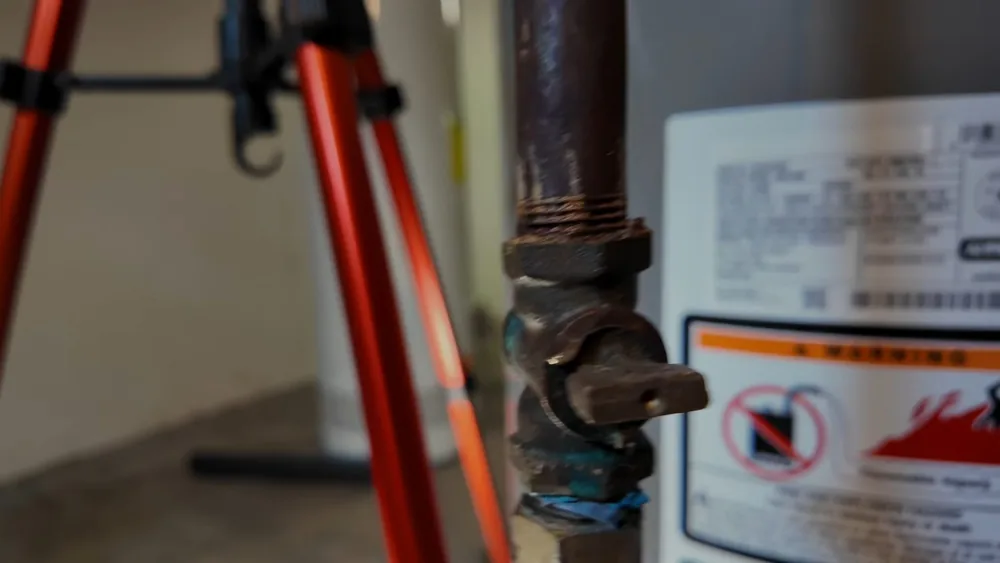
The general replacement threshold: if the unit is 8 years or older and needs any significant repair, replacement typically provides better long-term value than repair. If the unit is under 6 years old and the repair is straightforward, repair makes sense. Between those ages, we assess the specific failure mode and the internal corrosion level before recommending a direction. A unit showing rust-colored water or internal corrosion visible at the anode rod is approaching the end of its serviceable life regardless of what specific component has failed.
How we size and select the right unit
A correctly sized unit costs less to run and lasts longer. An undersized unit runs constantly and never fully recovers. An oversized one wastes standby energy. We calculate before ordering.
Household sizing assessment
We calculate the first-hour rating (FHR) required for your household based on the number of people, morning hot water demand habits, and whether the home has a soaking tub, a pool, or other high-demand fixtures. For Buckeye homes without a water softener, we typically size the tank slightly larger than the textbook recommendation to account for the capacity reduction that scale buildup will cause over the first few years of the heater's life.
Fuel type and existing infrastructure
Most Buckeye homes use either natural gas (provided by Southwest Gas) or standard 240V electric for the water heater. We confirm the existing fuel type and check the gas line capacity or electrical service capacity before ordering a replacement unit. Switching fuel types is possible but adds cost and permitting requirements. We'll discuss the tradeoffs if you're considering a fuel type change.
Code compliance items
Arizona plumbing code and City of Buckeye mechanical permit requirements include: proper venting for gas units, seismic strapping of the tank, a functioning T&P relief valve with correctly run discharge pipe, and an expansion tank on closed plumbing systems (most post-2000 homes). We assess all of these at the installation and include code-required upgrades in the installation quote.
Installation methods we use
Tank water heater replacement
The most common replacement in Buckeye. We drain and disconnect the existing unit, remove it from the space, install the new tank with all required connections (gas or electric, cold inlet, hot outlet, T&P discharge, drain, expansion tank), and test for leaks and proper operation before leaving. Most standard tank replacements complete in 2 to 4 hours. We carry common 40-, 50-, and 75-gallon tank heaters and can usually perform same-day installations for standard sizes.
Tankless water heater installation
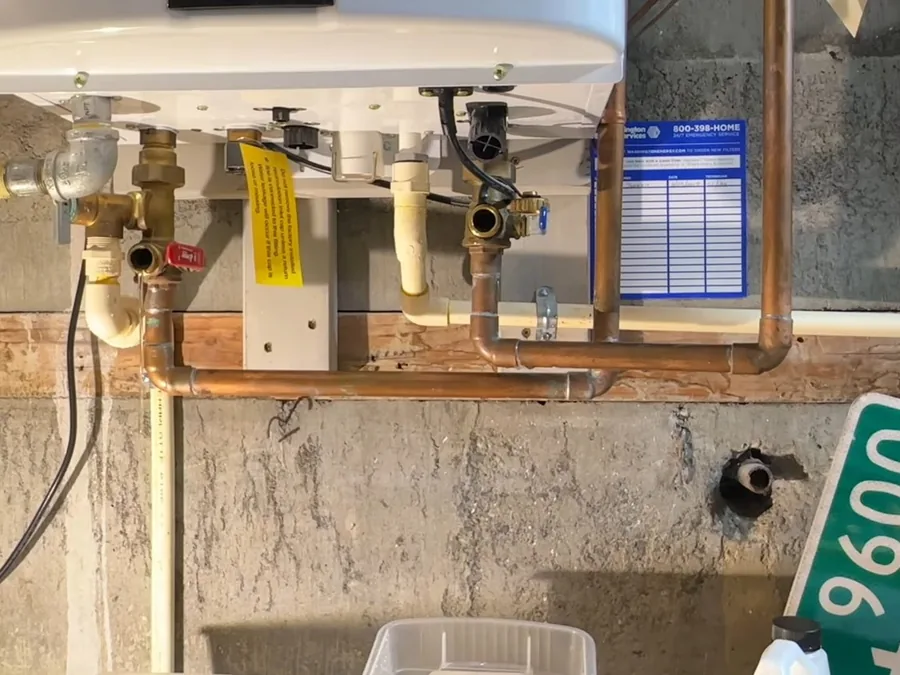
Tankless installation typically takes 3 to 6 hours and involves removing the existing tank, installing the new tankless unit with its venting, condensate management (on condensing models), and gas line or electrical upgrades if needed. Most gas tankless units require a larger gas supply line than the existing tank heater's connection. We assess the existing gas line size and run a new feed if the current line is undersized. City of Buckeye permit inspection is scheduled after installation.
Heat pump water heater installation
Heat pump water heaters (HPWHs) pull heat from the surrounding air rather than generating it directly, making them 2 to 3 times more efficient than standard electric resistance heaters. They work particularly well in Buckeye's climate, where air temperatures are warm enough to support efficient operation year-round, including through mild winters. HPWHs require a dedicated 240V circuit and a space large enough for adequate airflow. We assess space and electrical requirements at the estimate visit.
Cost of water heater installation in Buckeye
Typical price ranges (2026)
| Unit Type | Typical Installed Cost | Notes |
|---|---|---|
| Tank gas (40-50 gal) | $1,200–$1,900 | Most common replacement; same-day available in most cases |
| Tank electric (40-50 gal) | $1,100–$1,700 | May need panel circuit upgrade on older homes |
| Tank gas (75-80 gal) | $1,600–$2,500 | Larger households or homes with high peak demand |
| Tankless gas | $2,500–$4,500 | Includes gas line upgrade if needed; permit and inspection included |
| Heat pump water heater | $2,200–$4,000 | Requires adequate airspace; most efficient option for AZ |
All installation prices include permit, inspection, removal and disposal of the old unit, seismic strapping, expansion tank if required, and T&P valve setup. Quotes provided free before work begins. We pull the City of Buckeye permit; you don't need to manage that.
Many homeowners add a water softener installation in Buckeye at the same time to protect the new heater from the start. We also handle tankless water heater descaling and maintenance to keep an existing unit running efficiently.
Frequently asked questions about water heater replacement in Buckeye
Do I need a permit to replace a water heater in Buckeye, AZ?
Yes. The City of Buckeye requires a mechanical permit for water heater replacement. The permit requires proper venting, seismic strapping, T&P valve installation, and expansion tank installation on closed plumbing systems. We pull the permit, schedule the inspection, and handle all code compliance as part of the installation.
What size water heater do I need for a Buckeye home?
Tank size depends on household size and habits. General guidance: 2 people (40-gallon tank), 3 to 4 people (50-gallon), 5 or more people (75 to 80-gallon or dual-tank). Because Buckeye's hard water reduces effective capacity through scale buildup in homes without softeners, we often size slightly larger than the textbook recommendation.
How long does water heater installation take in Buckeye?
Most standard tank replacements take 2 to 4 hours. Tankless installations take 3 to 6 hours and require a separate city inspection. We often have common tank sizes in stock and can perform same-day installations for standard replacements.
Is a tankless water heater worth it in Buckeye, AZ?
For the right household, yes. Tankless units eliminate standby heat loss and last longer in hard-water markets. The tradeoff is that Buckeye's very hard groundwater requires annual descaling, and upfront cost is 2 to 3 times higher than a tank replacement. Households with a water softener already installed see significantly lower maintenance burden. We calculate the payback period for your specific usage before recommending a direction.
What happens to my old water heater?
We disconnect, remove, and dispose of the old unit as part of every installation. We transport old units for recycling through standard waste management channels. You do not need to arrange separate disposal.
Should I install a water softener at the same time as a new water heater?
If your home doesn't already have one, yes. Installing a softener alongside a new heater means the new unit never accumulates significant scale. Most Buckeye homes built after 2000 have a pre-plumbed soft water loop that makes softener installation straightforward at the same appointment.
Related Services
Plumbing in your area
Water heater installation in Buckeye and the West Valley
Free estimate, same-day installation for common sizes, permit included. Serving Buckeye, Goodyear, Surprise, Avondale, Litchfield Park, and the surrounding West Valley.
(623) 284-0371