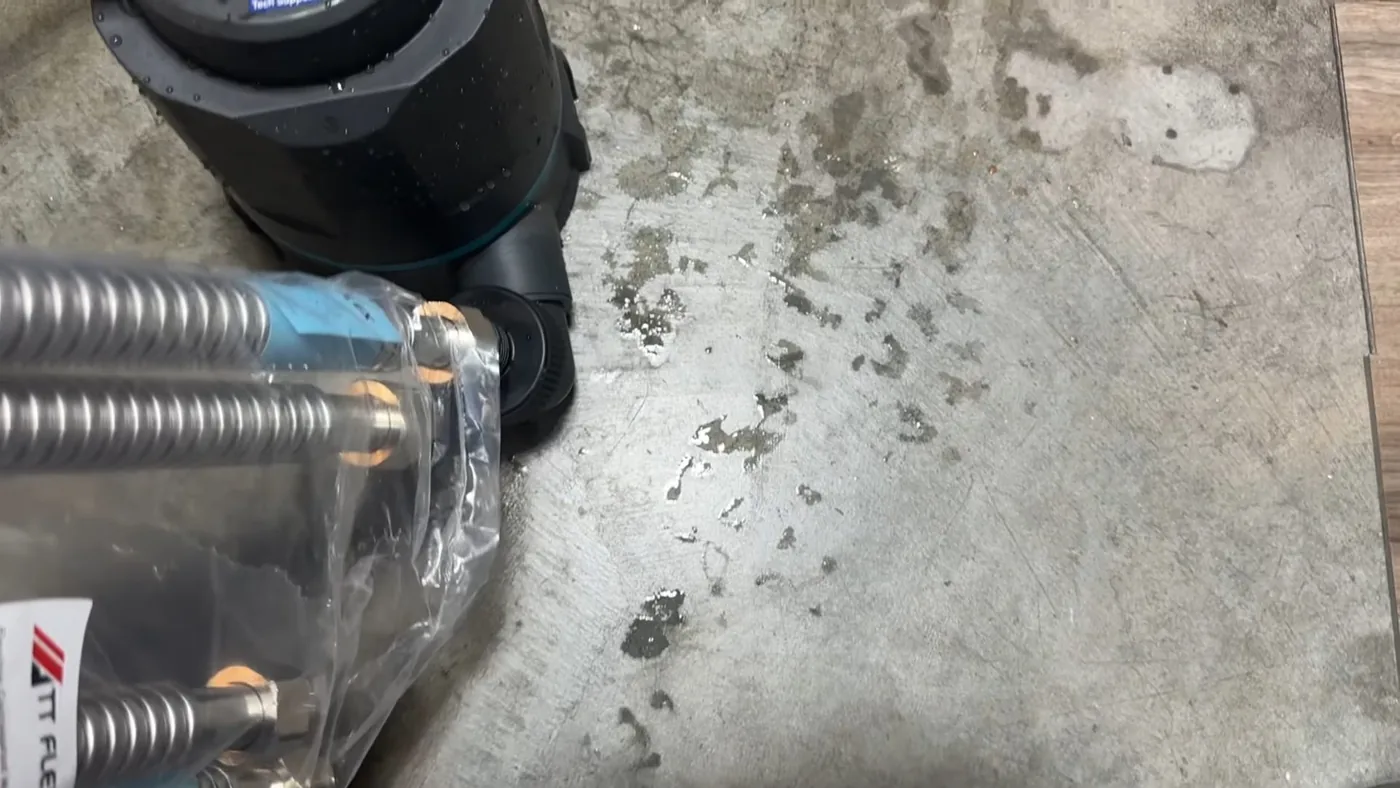
What tankless water heaters need in Buckeye's hard water environment
A tankless water heater heats water on demand as it flows through a heat exchanger, eliminating standby heat loss. In Buckeye, however, tankless units face the same hard water challenge as every other water-using appliance. The copper coils inside the heat exchanger are particularly susceptible to scale buildup from the 15 to 30 GPG mineral content in Buckeye's groundwater.
Scale inside the heat exchanger reduces flow rate, forces the burner to fire longer, increases gas consumption, and eventually produces error codes. Manufacturers typically void warranties on units that haven't been descaled on schedule. In Buckeye without a water softener, annual descaling is the realistic maintenance interval to keep a tankless unit running at rated efficiency and to preserve the warranty.
How we assess your tankless unit's condition
Flow rate and output temperature test
We measure actual flow rate at a hot water fixture and compare it to the unit's rated GPM. A significant drop indicates scale restriction in the heat exchanger or inlet filter. We also check actual output temperature against the thermostat setting. Temperature shortfall combined with longer ignition cycles points to heat exchanger fouling.
Error code and diagnostic reading
Most modern tankless units log error codes through the front panel. We read the history, identify scale-related or combustion-related error codes, and assess whether the issue is scale, a component failure, or a gas pressure problem. Common brands including Rinnai, Navien, Noritz, and Bradford White all have established diagnostic protocols we follow for accurate assessment.
Inlet filter and venting inspection
The inlet filter screen catches debris and mineral fragments from the supply line. In Buckeye's hard water environment, the filter can accumulate mineral particles that restrict flow independently of heat exchanger scaling. We remove, inspect, and clean the filter at every descaling service, and visually inspect the venting for blockage or condensate accumulation.
Tankless water heater services we perform
Heat exchanger descaling
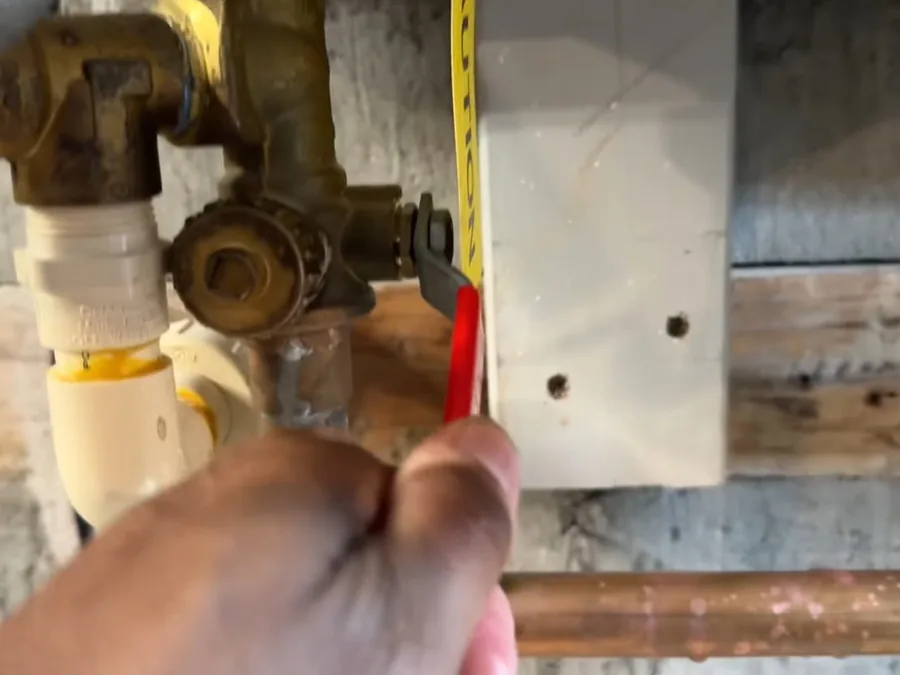
We connect a descaling pump to the service valves on the unit's cold inlet and hot outlet lines. A food-grade descaling solution circulates through the heat exchanger coils for 45 to 60 minutes, dissolving calcium and magnesium deposits. After the descaling cycle, we flush with clean water to remove all solution residue. The full appointment takes 1.5 to 2.5 hours including setup, flush, and operational testing.
Component repair
Igniter failures, gas valve problems, flow sensor malfunctions, and board errors are all repairable. We diagnose the specific failed component and order the correct part for the unit's make and model. We stock common components for the major brands most frequently installed in Buckeye and West Valley homes. Most component repairs complete in 1 to 3 hours once parts are available.
Tankless unit installation
We install new tankless units as replacements for existing tankless heaters and as upgrades from tank systems. Gas tankless installations in Buckeye frequently require upgrading the gas supply line, since most tankless units draw more BTUs than the tank heater they replace. We assess the existing gas line as part of every tankless installation estimate and include the upgrade in the quote if needed.
Cost of tankless water heater services in Buckeye
Typical price ranges (2026)
| Service | Typical Range | Notes |
|---|---|---|
| Descaling and flush | $200–$450 | Annual service for homes on untreated Buckeye groundwater |
| Inlet filter cleaning | Included | Checked and cleaned at every descaling appointment |
| Component repair | $150–$600 | Varies by part; most repairs in 1 to 3 hours |
| Tankless installation (gas) | $2,500–$4,500 | Includes gas line assessment and upgrade if needed; permit included |
Annual descaling at $200 to $450 is significantly less expensive than component replacement caused by unchecked scale damage. For homes without a water softener, annual descaling is the most cost-effective way to protect a tankless unit.
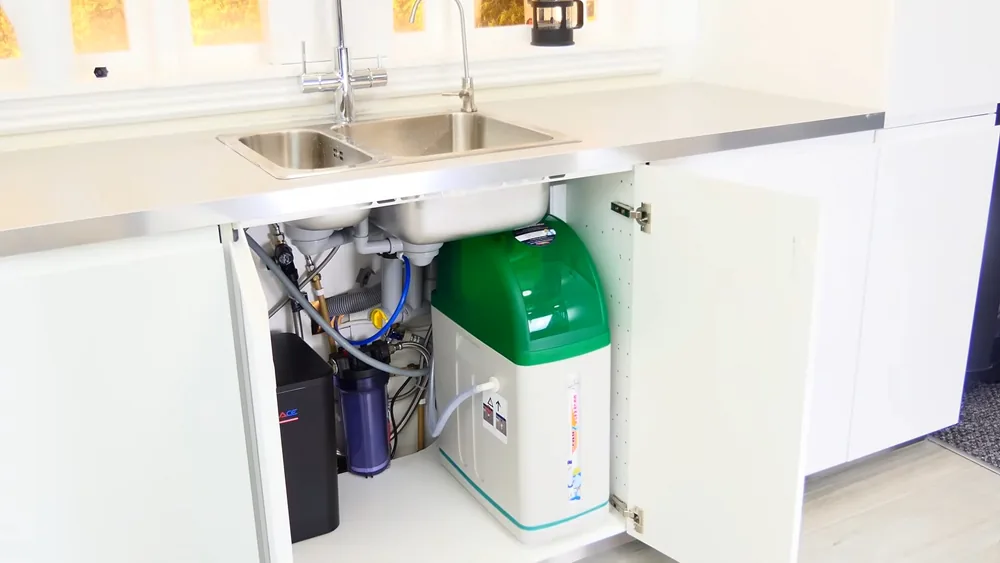
We also handle water softener installation to reduce descaling frequency, full water heater replacement when units reach end of life, and water heater repair for tank units.
Frequently asked questions about tankless water heaters in Buckeye
How often should a tankless water heater be descaled in Buckeye?
Annual descaling is the standard recommendation for tankless units on untreated Buckeye groundwater. Without a softener, mineral scale accumulates inside the heat exchanger within 12 months. For homes with a properly maintained water softener, descaling every 2 to 3 years is typically sufficient.
What are the signs a tankless water heater needs descaling?
A drop in water temperature during peak use, error codes indicating flow or heat exchanger issues, reduced flow rate at hot water fixtures, or the unit cycling on and off more frequently than usual. Buckeye homeowners without softeners often see these symptoms within 12 to 18 months of the last descaling.
Does a water softener prevent tankless water heater scale?
Yes. A properly maintained ion-exchange softener removes the calcium and magnesium that cause scale. Homes with softeners in good working order rarely develop significant buildup. The descaling interval extends from annual to every 2 to 3 years with a softener in place.
What flow rate does a tankless unit need for a large Buckeye home?
A typical large Buckeye home needing simultaneous shower, dishwasher, and faucet demand needs at least 9 to 11 GPM. Whole-house units for larger homes should be rated 11 to 14 GPM. Buckeye's warm incoming water temperature reduces the temperature rise the unit must provide, which is a modest sizing advantage.
How long does a tankless descaling service take?
1.5 to 2.5 hours, including setup, the 45 to 60 minute flush with descaling solution, clean water rinse, inlet filter cleaning, and operational test before we leave.
Related Services
Plumbing in your area
Tankless water heater services in Buckeye and the West Valley
Annual descaling, diagnostics, repair, and new installation. Serving Buckeye, Goodyear, Surprise, Verrado, and the surrounding West Valley.
(623) 284-0371