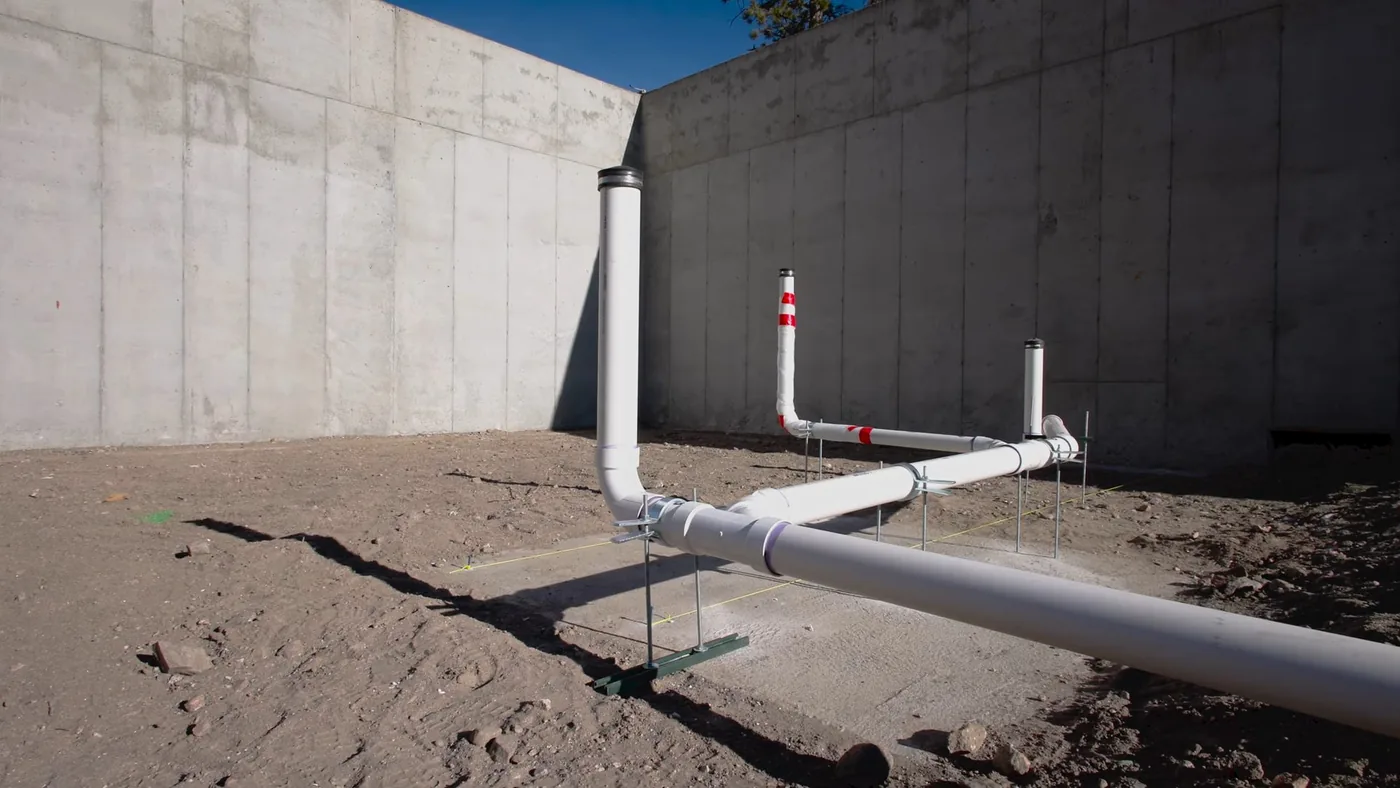
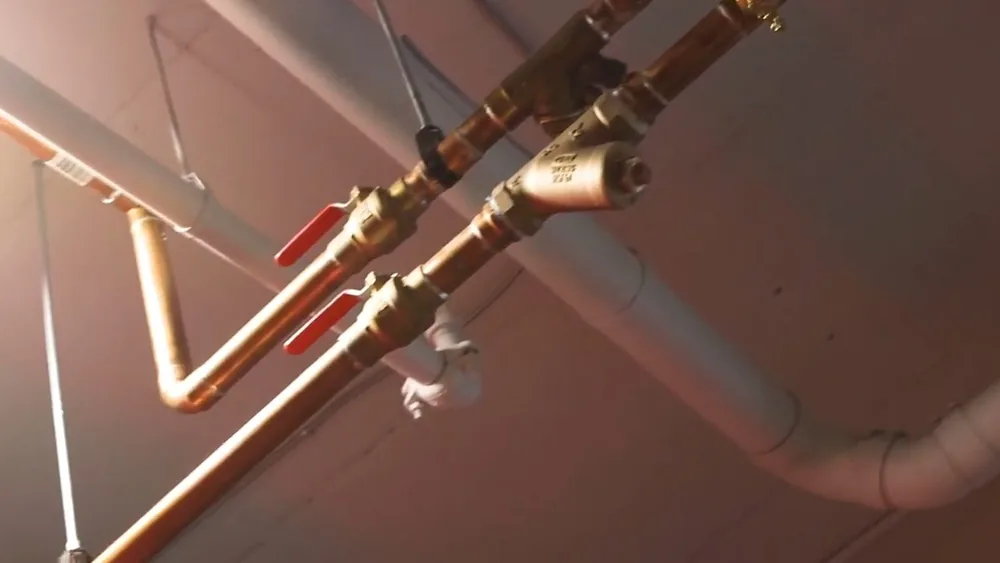
Verrado is one of the best-planned communities in the Phoenix metro, but a specific plumbing decision made during its early construction phases has created a predictable problem for thousands of homeowners. Homes built in Verrado between 2004 and approximately 2012 used copper supply lines embedded directly in the concrete slab. Those lines are now 14 to 22 years into service in a hard-water, high-mineral-soil environment that copper was not designed to withstand for this duration. Understanding why they fail and what your options are will help you make the right decision when the first leak appears, rather than the wrong one under pressure.
Why copper was embedded in the slab in the first place
Embedding supply lines in the concrete slab was standard practice in Arizona construction during the late 1990s and early-to-mid 2000s. The method was faster than routing pipe through walls and attic space, required fewer penetrations through framing, and was accepted by code at the time. The assumption embedded in the practice was that copper supply lines, with their long track record in above-slab and in-wall applications, would perform similarly under the slab. That assumption proved wrong in hard-water desert markets where soil chemistry accelerates copper corrosion significantly.
Later Verrado phases, roughly from 2013 onward, switched to PEX supply lines routed above the slab through walls and attic space. PEX doesn't corrode from hard water mineral exposure or soil chemistry the way copper does. If your Verrado home was built in 2013 or later, your supply lines are almost certainly PEX and the sub-slab copper issue doesn't apply to you. If you're unsure, the permit records on file with City of Buckeye Building and Safety identify the plumbing type used in your home's original construction.
How electrolytic corrosion works in Verrado's specific conditions
Three factors combine in Verrado's environment to accelerate copper corrosion specifically:
- Global Water Resources supply chemistry: Verrado is served by Global Water Resources rather than City of Buckeye. The supply carries high mineral content and specific chemical parameters that, in combination with Verrado's soil conditions, have proven aggressive toward copper over a 15-to-20-year exposure period.
- Desert alluvium soil pH and mineral content: The soil beneath Verrado's foundations carries minerals and pH conditions that create an electrochemical environment at any point where the copper contacts moist soil, including at every penetration point where supply lines pass through or near the slab surface.
- Temperature cycling: Arizona's extreme temperature differential between summer highs above 100 degrees Fahrenheit and winter nights that can drop below 40 degrees causes the copper pipe and surrounding concrete to expand and contract at different rates, stressing the pipe at fittings and bends over thousands of cycles across 15 to 20 years.
The result is pinhole corrosion that typically appears first at fittings, bends, and any point where the pipe contacts concrete or soil, then progresses to failure. The failure is rarely catastrophic and sudden; it's typically a slow drip that builds gradually until it becomes large enough to show symptoms at the floor surface or in the water bill.
Why the first slab leak usually isn't the last
The most important thing Verrado homeowners need to understand after experiencing the first slab leak is this: the corrosion process that caused the first failure has been working on every copper supply line in the slab for the same number of years, under the same conditions. The line that failed first was simply the first to reach the failure threshold. The others are progressing along the same corrosion curve.
Plumbers who work extensively in Verrado have tracked the pattern: after a first reroute, a second failure in the same home typically appears within 2 to 5 years. A third often follows. By the third or fourth individual reroute, the homeowner has spent $3,000 to $12,000 on cumulative rerouting work, experienced multiple water damage events, and still has remaining sub-slab copper lines approaching or past their failure threshold.
This is why the decision made at the first slab leak is the most financially important plumbing decision many Verrado homeowners will face. A single reroute addresses the immediate failure. A whole-home repipe addresses every sub-slab copper line at once.
The reroute vs. repipe decision: what to consider
A single-line PEX reroute typically costs $1,000 to $3,500 in Verrado depending on the reroute length and wall access. It permanently bypasses the failing copper section and provides immediate relief. It is the right choice when the home's plumbing system is in otherwise good condition, when this is genuinely the first failure in the home, and when budget constraints make the larger investment impractical in the near term.
A whole-home PEX repipe typically costs $4,000 to $8,000 for a standard single-story Verrado home, depending on square footage, number of bathrooms, and the complexity of the existing supply layout. It replaces every sub-slab copper supply line with PEX routed above the slab through walls and attic space. The old copper is capped and abandoned. No future slab leaks from copper corrosion are possible after a complete repipe. The work typically takes 2 to 3 days, and water is restored daily during the project so the household doesn't need to vacate.
The financial case for whole-home repiping becomes clear after the second slab leak. By that point, the homeowner has already spent $2,000 to $7,000 on two reroutes plus any water damage remediation. Adding a third reroute brings the cumulative expenditure to within range of what a full repipe would have cost after the first leak, while still leaving multiple sub-slab copper lines in place.
What happens to the old copper after repiping
The old copper sub-slab supply lines are capped in place at the point where they would have connected to the new PEX above-slab routing. They remain in the slab but carry no water pressure and cannot leak. The concrete is not opened unless a specific section needs to be capped at a location that requires slab access. In most Verrado repiping projects, the entire rerouting job is accomplished through walls and attic space without breaking the floor.
Protecting new PEX lines: the water softener connection
PEX doesn't corrode from hard water mineral exposure the way copper does. However, Verrado's Global Water Resources supply still carries high mineral content that affects fixtures, appliances, and water heaters in homes without softening. A water softener installation after repiping extends fixture and appliance life throughout the home. Most Verrado homes have pre-plumbed soft water loops that make softener installation straightforward alongside or after a repipe project.
After a first slab leak in a 2004-2012 Verrado home, ask your plumber to assess the condition of the remaining sub-slab copper at the same visit. A pipe condition assessment informs the reroute-versus-repipe decision before the next failure occurs.
Slab leak detection and repiping in Verrado
Specialists in Verrado's 2004-2012 copper sub-slab supply line issues. Rerouting and whole-home PEX repiping. Serving all of Verrado and surrounding Buckeye communities.
✆ Call (623) 284-0371or request a free estimate online
Related: Whole-home repiping in Buckeye · Plumbing services in Verrado · 5 signs your Verrado home has a slab leak · Slab leak repair cost in Buckeye (2026)